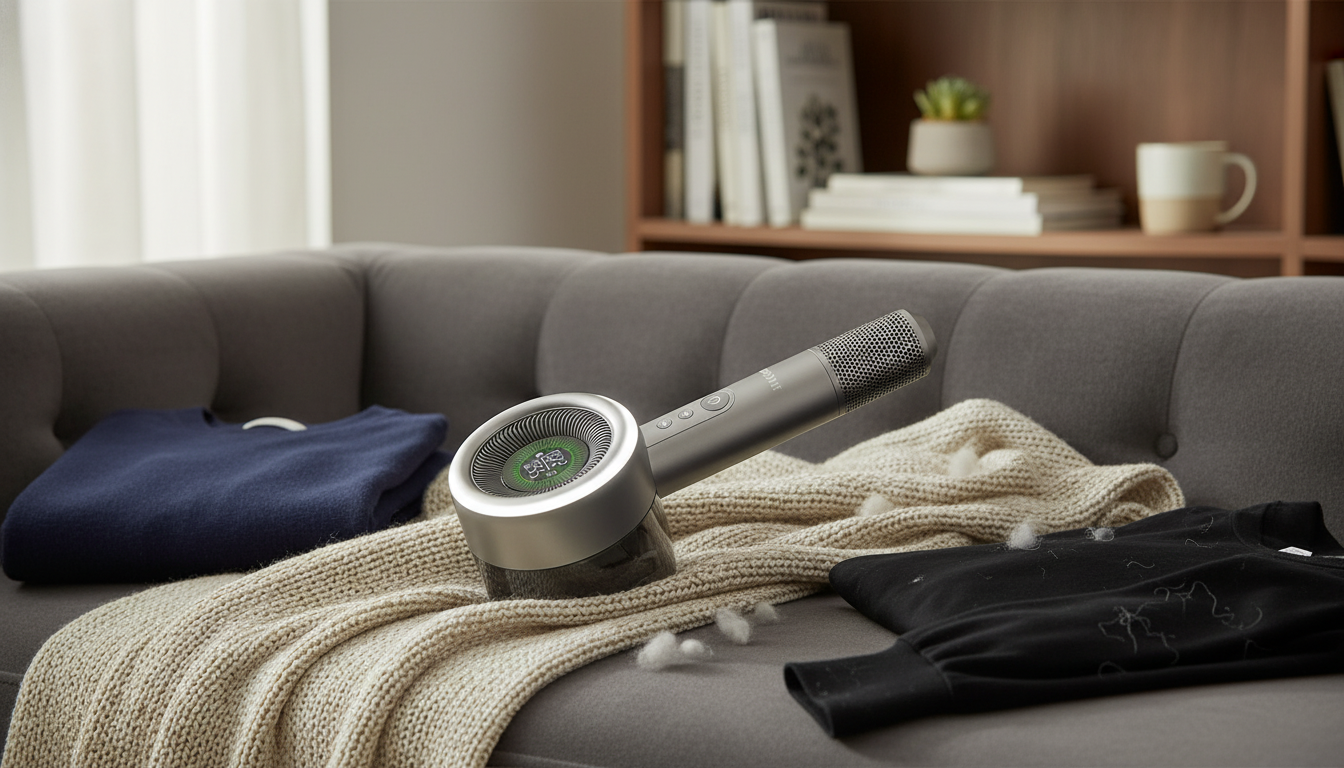
Pilling and fuzz can make even high-quality clothes and home textiles look worn out. A rechargeable lint remover with lighting and adjustable speed helps refresh sweaters, coats, upholstery, and blankets with more control and less guesswork—especially on darker fabrics or in low light.
This type of electric lint remover (often called a fabric shaver) is built to quickly improve how fabrics look and feel without laundering or replacing the item. Instead of pulling at fibers, it trims raised pills and fuzz from the surface so the textile looks smoother and more even.
If you’ve ever noticed little fiber balls forming after friction (like underarms, inner thighs, couch arms, or blanket edges), that’s pilling—a common phenomenon across many textiles. For a concise definition of pilling and related textile terminology, see AATCC Textile Terms.
Many fabric shavers can remove pills, but a few practical features make the process faster, safer, and less frustrating—especially when you’re working on different fabric types or tackling larger items.
| Feature | Why it matters | Best used for |
|---|---|---|
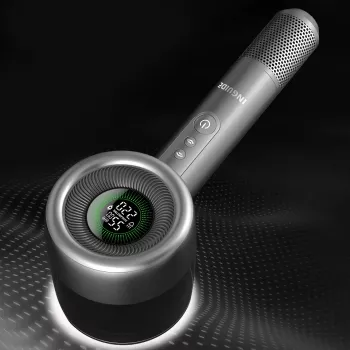
| 4000mAh battery | Less frequent charging and steadier performance in longer sessions | Multiple garments, blankets, upholstery touch-ups |
| LED lighting | Improves visibility and precision on dark or patterned fabrics | Sweaters, coats, car seats, sofa arms |
| LCD display | Quick battery awareness to avoid mid-session shutdown | Long sessions and travel packing decisions |
| 5-speed control | Adjusts aggressiveness to match fabric type and pill density | Delicates to heavy knits |
Speed control isn’t just about convenience—it’s a safety and finish-quality feature. The right speed helps you remove pilling efficiently while lowering the chance of stressing delicate fibers.
A helpful mental model: increase speed to handle more pill density or tougher fabric structure, not to compensate for pressing harder. Light contact plus the right setting typically produces the smoothest results.
A fabric shaver can be gentle on clothing when used with a controlled approach. Think “glide and check” rather than “scrub and rush,” especially on knits.
Also check care labels before working on specialty fabrics. If a textile is labeled delicate, treat it as a “start-low, test-spot” item. For a clear overview of care labeling expectations and common label concepts, reference FTC guidance on the Care Labeling Rule.
Lint shavers and lint rollers solve different problems, and pairing them often delivers the best-looking results.
If an item looks “fuzzy” rather than “hairy,” that’s usually the cue to shave. If it looks clean but is covered in lint or hair, that’s usually the cue to roll.
Lay the fabric flat on a firm surface, start at a low speed, and glide the shaver with light pressure. Avoid loose threads and delicate trims, and empty the lint bin as it fills to keep cutting performance consistent.
Traditional lint rollers use adhesive (or a reusable tacky surface) to lift loose lint, hair, and dust from fabric. Electric lint shavers don’t “pick up” pills—they trim raised fibers to smooth the surface, so each tool is best for different messes.
Yes, they work well for surface pilling and fuzz, especially on sweaters, coats, and blankets. They won’t repair holes or restore thinning fabric, and results improve when you use gentle passes and keep the head and lint bin clean.




Leave a comment