Ceramic Retro Handle Vase for Modern Tabletop Flower Arrangements
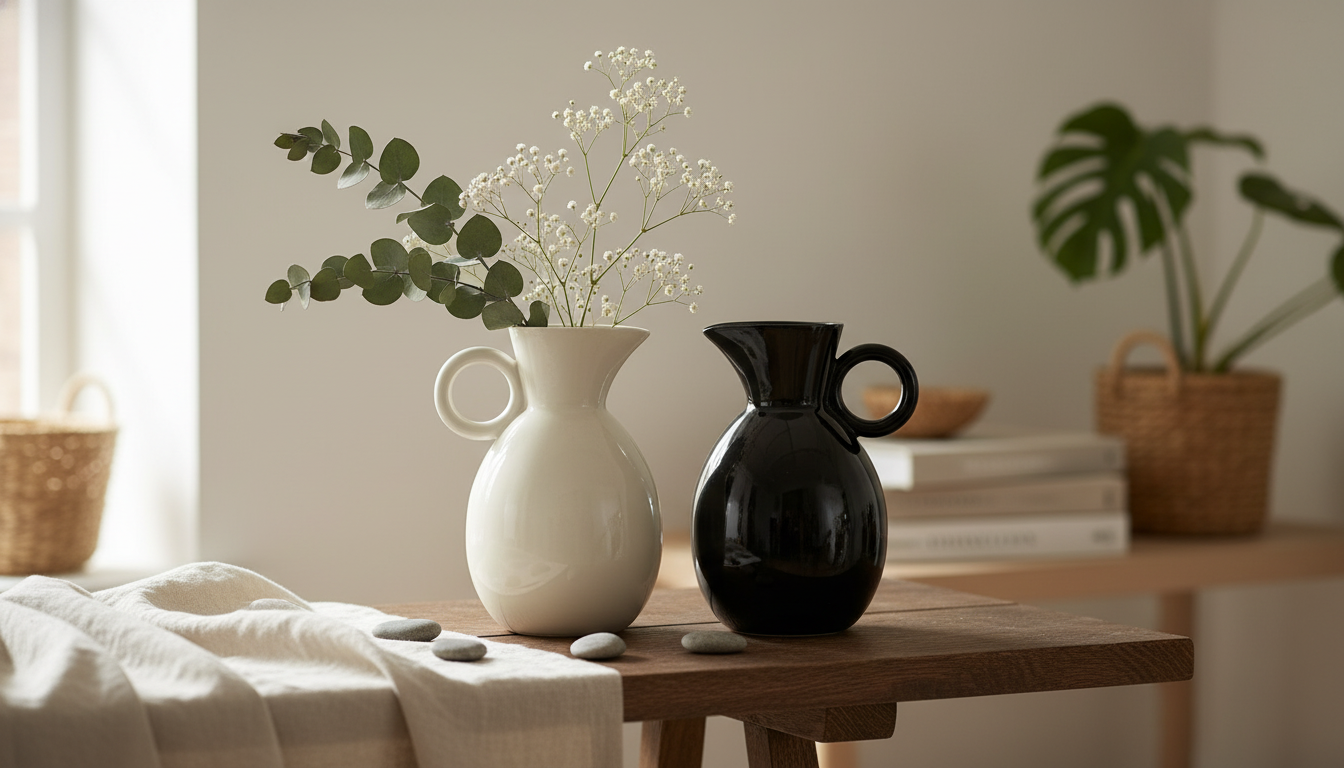
A ceramic vase with a retro-inspired handle brings sculptural character to shelves, consoles, and dining tables while staying easy to style with fresh stems, dried botanicals, or simple greenery. The handle introduces an intentional “cutout” of negative space—so even a simple bundle looks composed, not cluttered. Below are practical ways to choose the right piece, build balanced arrangements, and place and care for a ceramic vase so it feels settled and curated in any room. For more guidance, see Ceramic Modern Vase Set of 3, Neutral Small … – Landskrona Foto.
Why a handle-shaped silhouette works in modern décor
- Creates a built-in focal point: the handle reads like an arch, adding negative space that feels gallery-like and helps the vase stand out even when it’s not filled.
- Balances soft and structured forms: curved ceramic lines soften sharp furniture edges and modern materials such as glass, metal, and stone.
- Adds visual height without bulk: the open handle can make the piece feel taller and lighter than a solid-bodied vase, which is ideal for smaller surfaces.
For a quick styling cue, think of the handle as part of the “arrangement.” If stems hide the opening completely, the vase can look like any other vessel; if the opening remains visible, the silhouette does more of the design work. For further reading, see Rustic Ceramic Flower Vase with 2 Handles, Small Decorative ….
Where it looks best: tabletop and shelf placement
- Dining table: place slightly off-center so it doesn’t block sightlines; pair with low candles or a runner for a composed look.
- Console or sideboard: anchor with a tray or books to prevent the vase from feeling “floaty” against a wide surface.
- Open shelving: use as a shape contrast among stacked objects; leave breathing room around the handle opening.
Placement ideas by room
| Room |
Best surface |
What to pair it with |
Arrangement height |
| Living room |
Coffee table or side table |
Stacked books, small bowl, coaster set |
Low to medium to keep conversation open |
| Entryway |
Console table |
Catchall tray, mirror, framed print |
Medium to tall for a welcoming statement |
| Dining area |
Center of table or near one end |
Candles, linen runner |
Medium; avoid overly tall stems |
| Bedroom |
Dresser or nightstand |
Jewelry dish, lamp, small framed photo |
Low; calming and unobtrusive |
| Home office |
Credenza or bookshelf |
Pen cup, minimal sculpture |
Low to medium for a clean workspace |
Flower arrangement styles that suit a retro handle vase
- Single-branch statement: one curved branch (eucalyptus, olive, magnolia) highlights the handle’s outline and reads intentional with minimal effort.
- Loose modern bundle: 5–9 stems with varied heights; keep the center airy so the handle remains visible and the shape doesn’t feel “plugged up.”
- Dried and preserved mix: pampas, bunny tails, palm spears, or reed grass for long-lasting texture—especially striking against matte ceramic.
- Monochrome look: choose one color family (whites/greens, blush tones, or deep burgundy) to emphasize the sculptural form rather than the color story.
If you want a reliable visual reference for balance, study still life composition—museums are surprisingly helpful for learning proportion and negative space. The Met’s collection is a great place to browse for inspiration: The Metropolitan Museum of Art.
How to Choose the right ceramic vase for your space
- Scale: match the vase height to the surface—larger tables can handle taller pieces, while narrow shelves need a slimmer footprint that won’t crowd surrounding objects.
- Mouth opening: a narrower opening supports upright stems; a wider opening suits relaxed, fanned arrangements and thicker dried bundles.
- Finish and color: matte neutrals feel modern and calm; glossy finishes reflect light and read more decorative, especially near windows or lamps.
- Handle proportion: a thicker handle feels bold and graphic; a thin handle looks delicate and minimalist.
- Weight and stability: on high-traffic surfaces, choose a piece that won’t tip easily, especially with taller stems or top-heavy branches.
A quick rule for “looks right”: if the vase is meant for a dining table, keep the arrangement at or below eye level when seated. For consoles and entry tables, you can go taller because the viewing angle is usually standing.
Simple arranging method for a balanced silhouette
- Start with structure: add 1–2 sturdy stems (woody branches or thick greens) to define the height and direction.
- Build a triangle: place stems at three heights for a stable, modern profile—tallest slightly off-center.
- Keep the handle visible: avoid crowding the interior opening; leave negative space as part of the design.
- Rotate as you go: turn the vase every few stems to maintain an even look from multiple angles.
- Finish with a soft edge: add one trailing element (fern, jasmine vine, or amaranthus) for movement.
For fresh stems, basic conditioning makes a noticeable difference: trim ends at an angle, remove leaves below the waterline, and use clean water. For a deeper refresher on display care, see Royal Horticultural Society — Cut Flowers.
Care and maintenance for ceramic vases
Styling pairings that make the vase feel intentional
For foundational floral design principles—proportion, rhythm, and line—browse educational resources like Smithsonian Gardens — Floral Design Basics and apply the same ideas to minimalist arrangements.
FAQ
Can a ceramic vase hold water for fresh flowers?
Yes, as long as the interior is watertight. Use clean water, change it regularly, and rinse the vase to prevent residue buildup that can cause odor or cloudy water.
What flowers look best in a handle-style vase?
Sculptural stems and airy bundles work best—single branches, eucalyptus, tulips, ranunculus, or a restrained dried bouquet that keeps the handle opening visible.
How do you clean a ceramic vase with a narrow or curved interior?
Wash with warm soapy water using a bottle brush to reach tight curves. For mineral stains, soak with diluted white vinegar, then rinse thoroughly and dry completely.
Recommended for you







Leave a comment