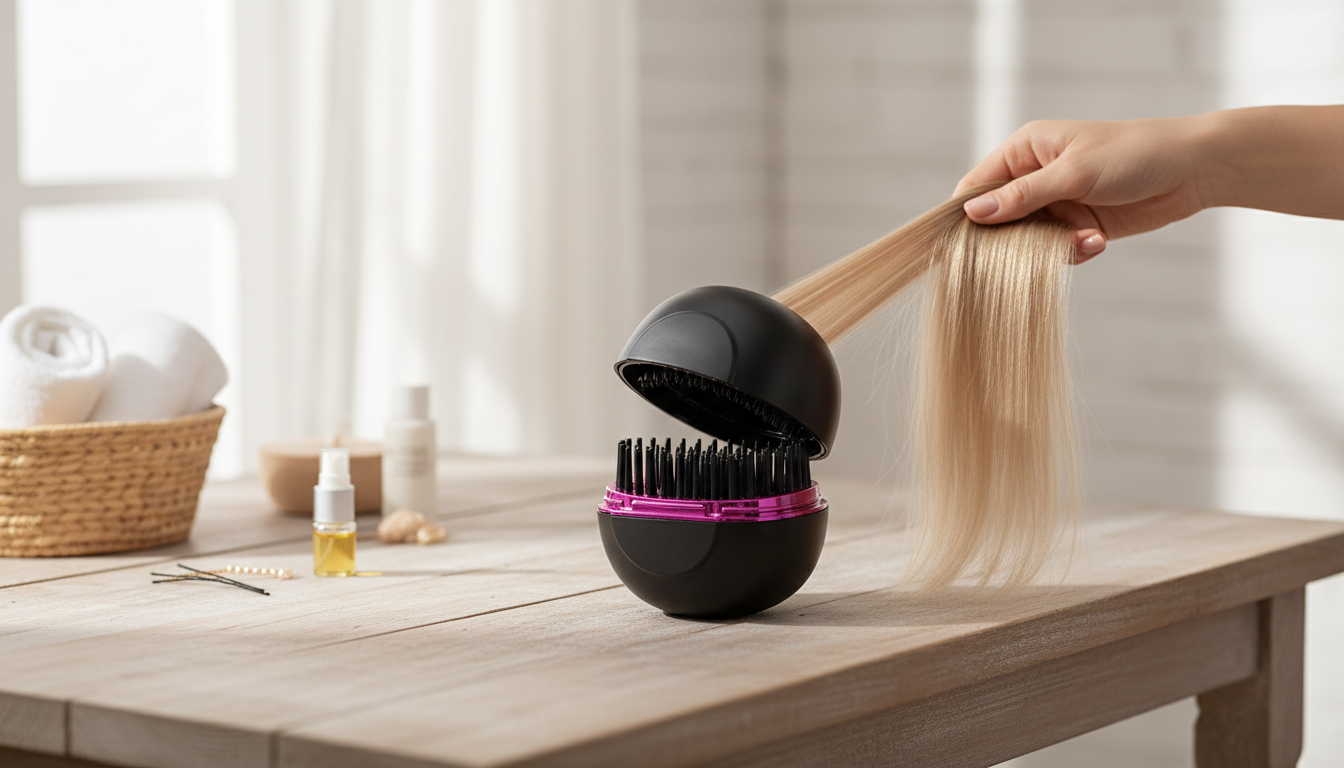
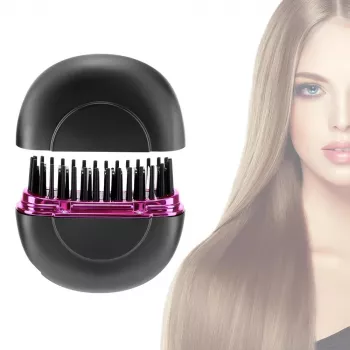
A cordless straightening brush is built for quick touch-ups, travel days, and styling sessions that don’t revolve around finding an outlet. With ceramic heat, ionic care, and an anti-scald layout, this style of tool aims to smooth hair while keeping handling safer and frizz lower—especially when used with the right temperature, technique, and prep. For more guidance, see Flat Iron Brush.
Unlike a traditional flat iron that presses hair between plates, a straightening brush combines a heated surface with brush teeth so you can guide hair into place as you smooth it. The result is typically a “brushed-straight” finish that looks natural and airy rather than ultra-pressed. For further reading, see Wet To Dry Curling Iron |.
Ceramic and ionic technologies don’t replace good technique, but they can meaningfully shape how smooth hair looks—and how much effort it takes to get there.
For overall heat-damage prevention, smart habits matter as much as tool design. The American Academy of Dermatology offers practical, everyday guidance on reducing breakage and heat stress in its hair care tips to help prevent damage.
Wireless hot tools are meant to be convenient, but safe handling still makes the biggest difference—especially around the hairline, ears, and nape.
Choosing the right cordless straightening brush is mostly about matching heat control, battery reliability, and brush design to your hair density and styling goals.
Multiple heat settings make it easier to tailor styling: lower settings for fine, highlighted, or fragile hair; moderate for most hair types; and higher only when truly needed for coarse textures that resist shaping. More control often means fewer passes—one of the simplest ways to reduce heat stress.
Fast heat-up is great for quick touch-ups, but stable temperature matters more for full styling. If heat swings mid-session, it can lead to repeat strokes on the same section to “make it work.”
For travel and busy routines, prioritize clear charge indicators, consistent runtime, and convenient charging. USB charging can be especially helpful when outlets are limited. Also check whether the tool can be locked for packing so it doesn’t turn on in a bag.
Compact tools are easier to pack, but the brush head should still be wide enough to style efficiently without snagging. If you have long or thick hair, a too-small head may slow you down and increase heat exposure.
Wider spacing can help thicker hair pass through more cleanly; more guarded designs can improve comfort and reduce the chance of brushing too close to skin.
| Hair type/goal | Helpful features | What to avoid |
|---|---|---|
| Fine or fragile hair | Lower heat settings, steady ceramic heat, fewer passes | High heat as default, repeated slow passes on the same strand |
| Thick or coarse hair | Moderate-to-higher heat options, wider bristle spacing, strong detangling path | Rushing with big sections that require multiple re-dos |
| Frizz-prone or dry climates | Ionic care, ceramic surface, smoothing serum/heat protectant | Brushing aggressively without prep, skipping protectant |
| Travel and touch-ups | Cordless use, clear battery indicator, compact body, lock/cover | Bulky designs, unclear charging status, no travel protection |
Ceramic surfaces are often preferred because they tend to distribute heat more evenly and glide smoothly, which can reduce hot spots and the need for repeated passes. The real difference comes from using the right temperature for your hair type, keeping hair fully dry, and using good technique.




Leave a comment