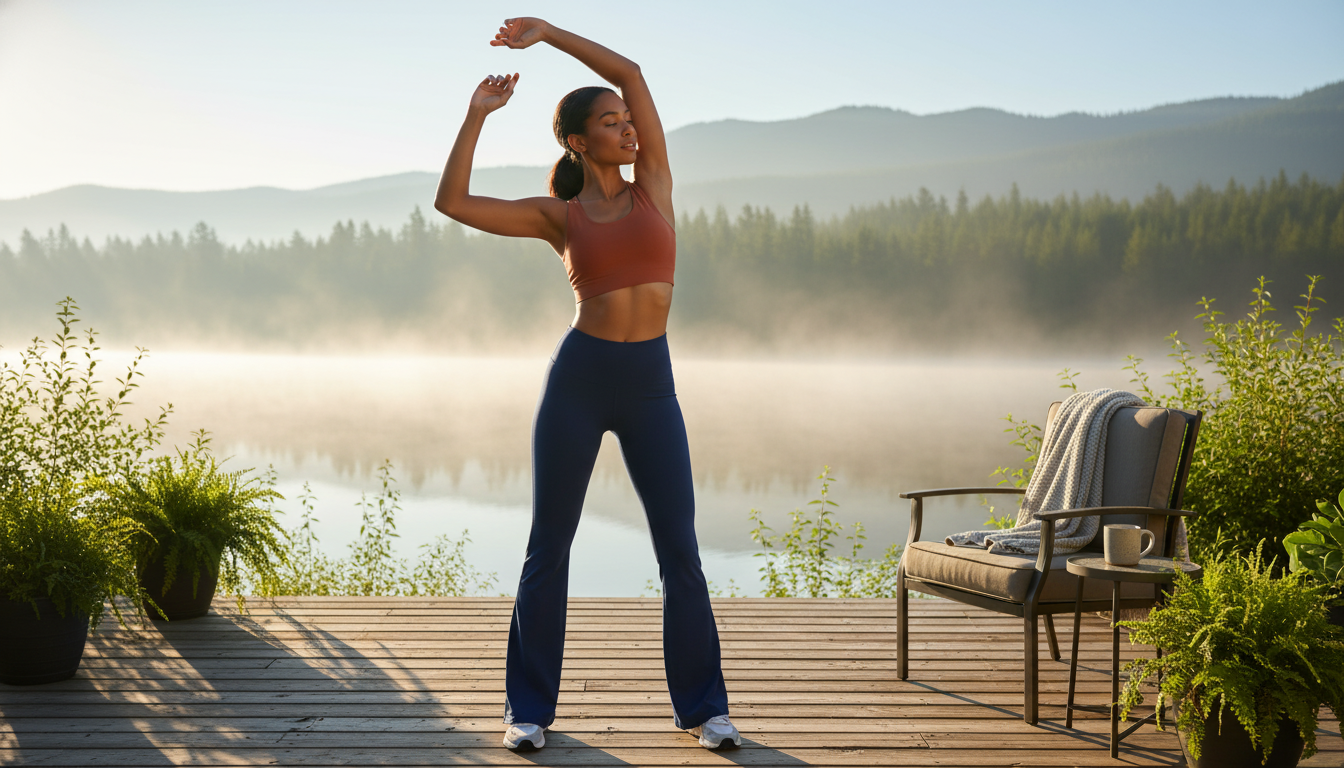
High-waist flared yoga pants blend the comfort of leggings with the drape and movement of a wide-leg silhouette. The right pair stays put through squats, stretches, and errands, while delivering a smooth fit at the waist and a flattering flare from the knee down.
Compared with classic tapered leggings, flared yoga pants are designed to feel less restrictive below the knee while still offering a close, supportive fit through the hips and thighs. That mix can make them a go-to option for low-impact studio work, warm-ups, and everyday outfits that don’t look overly “gym-only.”
Fit determines whether flared yoga pants feel sleek and supportive or constantly need adjusting. Since the leg opens up toward the hem, the waistband and hip fit matter even more for staying power during movement.
| Preference | What to look for | Best for |
|---|---|---|
| More shaping | Moderate compression, reinforced waistband | Gym training, cycling warm-ups |
| More comfort | Softer knit, lighter compression, wider leg | Yoga, travel, lounging |
| Petite-friendly | Short inseam options or easy-to-hem fabric | Everyday wear without dragging |
| Curvy/hips-forward | Higher rise with stretch recovery | No slipping or gaping at the back |
Flared yoga pants can look similar on the hanger, but fabric quality shows up quickly once you start moving. A pair that holds its shape, stays opaque, and feels comfortable against the skin can make the difference between “all-day favorite” and “worn once.”
If workouts are part of a broader health routine, it helps to choose gear that makes movement easier to stick with. For general fitness benefits tied to consistent physical activity, see the Mayo Clinic overview of exercise benefits. For pregnancy and postpartum considerations around activity, the ACOG guidance on physical activity is a helpful reference to discuss with a clinician.
The most flattering flared yoga pants are usually the ones matched to how they’ll actually be worn: your workout style, your footwear, and the environments you’re moving through (studio floors, sidewalks, airports, or home).
For a fast try-on check, do a few deep squats, a forward fold, and a short walk. The waistband should stay anchored, the seat should remain opaque, and the hem shouldn’t sweep the floor.
Because the leg line is more dramatic than skinny leggings, flared silhouettes look best when the top half of the outfit creates balance. Think fitted, cropped, or structured layers that keep the overall look intentional.
Flared hems are more likely to brush against shoes and floors, so a little care goes a long way. Proper washing and drying help preserve stretch, prevent fuzzing, and maintain that clean “drape” that makes flares look polished.
They can, as long as the waistband is wide, truly high-rise, and has good stretch recovery. Choose the correct size and do a quick squat test to confirm the waist doesn’t roll or slide.
Squat-proof coverage depends on fabric thickness, knit density, and fit. Test the fabric in bright light and avoid overstretching by sizing correctly for your hips and seat.
Aim for a hem that clears the floor by about 0.5–1 inch when wearing your usual workout shoes. If you’re petite or between lengths, consider a shorter inseam or hemming to prevent dragging and fraying.





Leave a comment