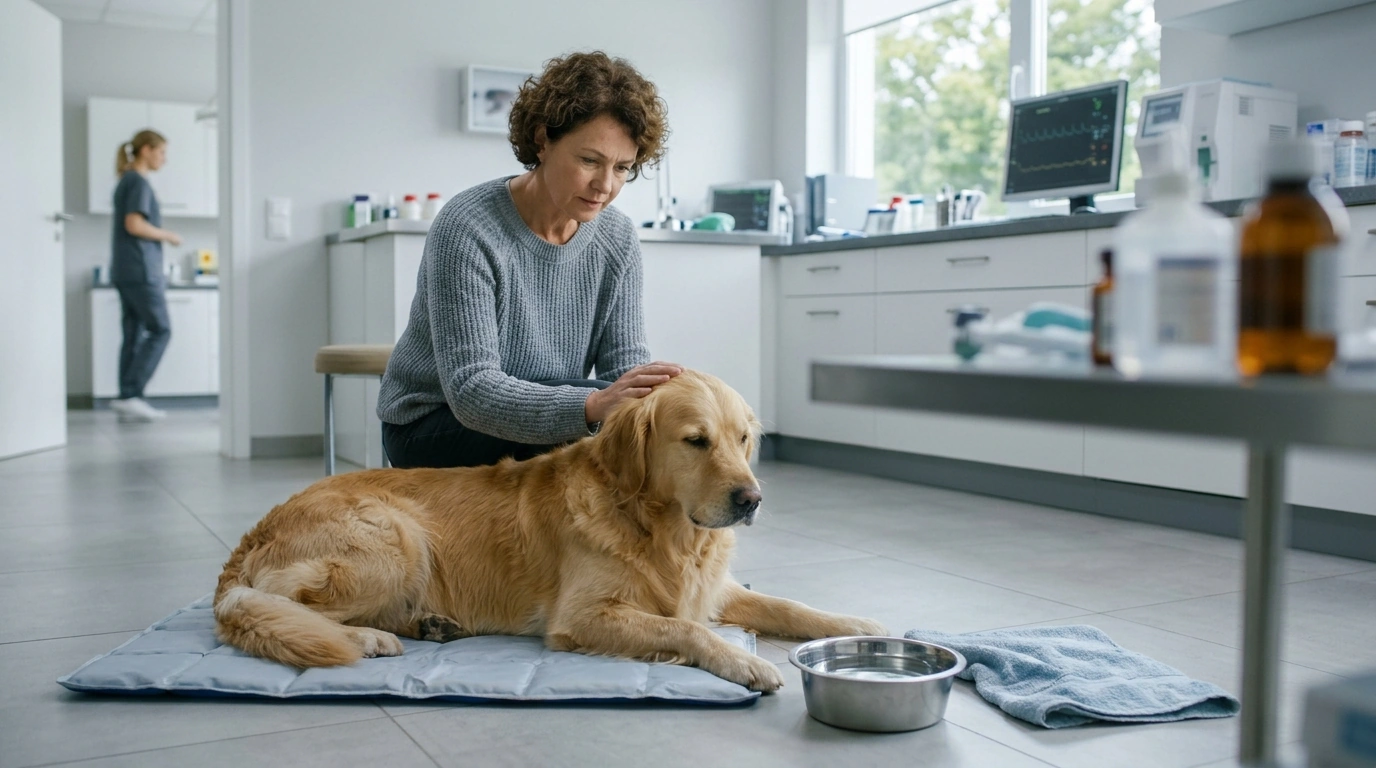
A dog may begin to improve within hours of treatment for heat stroke, but recovery can take several days or longer. Some dogs need hospitalization for monitoring and intensive care, and severe heat stroke can cause complications that appear after their temperature has returned to normal.
There is no reliable recovery timeline you can use at home. If you suspect heat stroke, cool your dog immediately and contact an emergency veterinarian. Heat stroke is life-threatening, even if your dog seems more comfortable after cooling.
Recovery depends on how high your dog’s body temperature rose, how long they were overheated, and whether organs were damaged. Prompt cooling and veterinary treatment improve the chances of recovery, but a dog who initially seems stable can still develop serious problems.
Your veterinarian may recommend blood tests and continued monitoring for dehydration, clotting problems, kidney injury, or other complications. Follow-up appointments may also be needed after your dog comes home. Ask your veterinarian what changes to watch for and when your dog can return to normal activity.
Move your dog out of the heat into shade or an air-conditioned area. Apply cool tap water to their body and use a fan or air movement to help them cool. Offer small amounts of cool water if they are alert and able to drink, but do not force them to drink.
Call an emergency veterinarian as you begin cooling and arrange transport right away. Continue cooling during the trip as directed by the veterinary team. Do not delay care to see whether your dog recovers at home, and avoid covering them with wet towels, which can trap heat.
Follow your veterinarian’s discharge instructions closely. Your dog may need a quiet, cool place to rest, access to fresh water, and a gradual return to exercise. Keep them out of hot conditions while they recover, and give any medication only as prescribed.
Contact your veterinarian immediately if your dog becomes weak, collapses, vomits, has diarrhea, seems confused, or shows any other new or worsening signs. Our team recommends keeping the emergency clinic’s number handy during recovery.
For more guidance on recognizing an emergency, visit our guide to heat stroke signs and emergency care in dogs.
Signs can include heavy panting, excessive drooling, weakness, vomiting, confusion, or collapse. If you notice these signs after heat exposure, begin cooling your dog and seek emergency veterinary care immediately.







Leave a comment