Portable Bluetooth Speaker with Hook: Built for Water, Trails, and Everyday Carry
A compact Bluetooth speaker with a built-in hook is designed for grab-and-go listening—clipped to a backpack, hung in a shower, or secured at a campsite. With an IPX7 waterproof rating and up to 24 hours of playtime, the focus is simple: dependable sound outdoors and around water without constant recharging or careful handling. For more guidance, see Reviews by chinmie – Head-Fi.
What Makes a Hook-Style Portable Speaker Useful
The hook is more than a styling detail. It changes how and where a speaker can be used, especially when hands-free convenience and quick placement matter. For further reading, see Reviews by regancipher – Head-Fi.
- Clip-and-carry convenience: Attach it to backpacks, belt loops, stroller handles, bike frames, and tent lines so it travels with you instead of taking up hand space.
- Better placement options: Hanging a speaker can help sound project more evenly than setting it on soft or uneven surfaces that absorb vibrations and dull the audio.
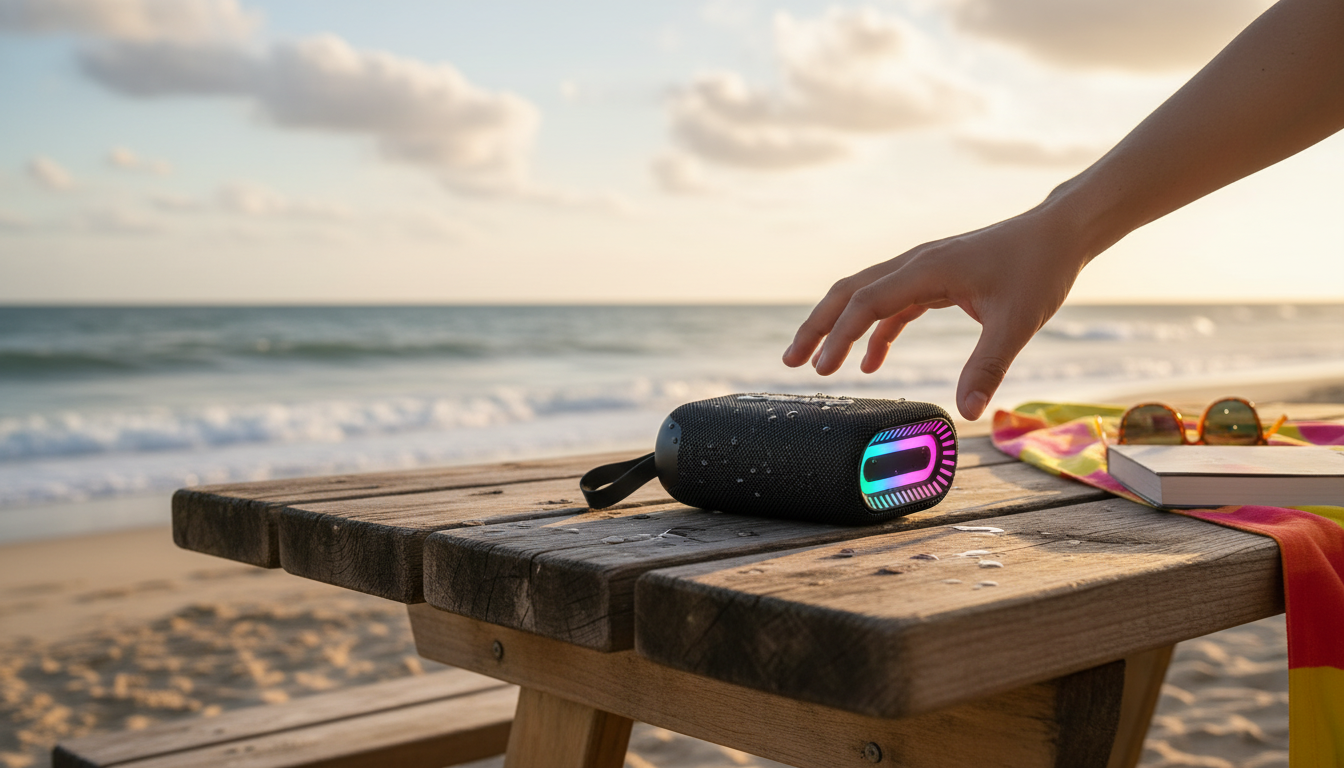
- Safer around water and sand: Keeping the speaker off the ground reduces contact with puddles, wet towels, and gritty sand that can work its way into seams and buttons.
- Quick setup for small gatherings: Move it from shade to table to camp chair easily without hunting for a “good spot,” re-routing cables, or re-pairing devices.
IPX7 Waterproof Rating: What It Covers (and What It Doesn’t)
IPX7 is a practical level of water protection for real life: shower use, poolside splashes, and the occasional “oops” drop near water. It’s important to understand what the rating actually tests.
- Immersion protection: IPX7 indicates protection against immersion in water up to 1 meter for up to 30 minutes under specific test conditions.
- What “X” means: The “X” indicates dust resistance isn’t rated in the IPX label—only water resistance is tested.
- Real-world caution: Soaps, pool chemicals, saltwater, and hot water can be harsher than lab conditions. If exposed to salt or chlorine, rinse gently with fresh water and dry thoroughly—especially around ports.
- Waterproof isn’t indestructible: Drops, impacts, and worn gaskets can reduce protection over time, even if the speaker still “looks fine.”
Common Water-Resistance Ratings for Portable Speakers
| Rating |
Typical Meaning |
Best For |
| IPX4 |
Splash-resistant from any direction |
Light rain, kitchen counters, workouts |
| IPX5 |
Water jets from a nozzle |
Boats (spray), heavier rain |
| IPX6 |
Powerful water jets |
Outdoor use where rinsing is likely |
| IPX7 |
Immersion up to 1 m for 30 min |
Poolsides, showers, accidental drops into water |
| IPX8 |
Immersion beyond 1 m (manufacturer-defined) |
Extended submersion scenarios (varies by model) |
For a deeper look at how these ratings are defined, the IEC overview of the IP Code is a reliable reference: IEC 60529 (IP ratings overview).
24-Hour Playtime: What to Expect in Daily Use
“Up to 24 hours” is a helpful benchmark, but actual runtime depends on how the speaker is used. A long-play battery shines most when you’re away from outlets or want a speaker that’s always ready.
- Volume changes everything: Higher volumes and boosted bass typically reduce runtime, especially outdoors where people naturally turn the sound up.
- Use-case planning: For day hikes, beach days, tailgates, or multi-day trips, longer playtime reduces reliance on a power bank and helps avoid mid-day charging breaks.
- Charging habits: Topping up before an outing and avoiding frequent full drain cycles can help maintain battery health over the long run.
- Cold-weather note: Lithium batteries can drain faster in low temperatures. When not actively playing, keep the speaker insulated in a bag pocket rather than clipped outside in the wind.
Sound and Connectivity Basics That Matter Outdoors
Outdoor listening is different from living-room listening. Wind, open space, and background noise can make even a “loud” speaker seem quieter.
- Outdoor sound needs: Open air absorbs audio, so a speaker that fills a bedroom may not carry as far at a picnic table or campsite.
- Clarity over boom: Balanced mids and clear vocals help playlists, podcasts, and calls stay intelligible when there’s wind, water, or chatter nearby.
- Bluetooth stability: Reliability improves with shorter distance and fewer obstacles. Keep your phone within a practical range and avoid burying it under coolers or metal gear that can interfere with signal.
- Latency considerations: Some Bluetooth connections may show minor delay with video. For music playback, it’s typically not noticeable.
Bluetooth behavior is governed by an evolving set of standards; for background on how Bluetooth works across devices, see the official overview: Bluetooth Core Specification (overview).
How to Choose the Right Waterproof Hook Speaker
Choosing the right model comes down to where it will be used most and what’s most annoying to run out of: volume, battery, or durability.
Care Tips for Long-Term Waterproof Performance
FAQ
What is an IPX speaker?
An IPX speaker has a water-resistance rating where the “X” means dust resistance wasn’t rated. The number (such as IPX4 or IPX7) indicates how the speaker performs against splashes or immersion, which helps determine if it’s suitable for bathrooms, poolside use, or outdoor trips.
What is the highest waterproof rating for a speaker?
In the IPX scale, IPX8 is typically considered the highest and is intended for immersion beyond 1 meter under manufacturer-defined conditions. Some products use full IP ratings like IP67, which indicate both dust protection (6) and water protection (7), while IPX7 and IPX8 address water only.
What is the best portable outdoor Bluetooth speaker?
The best choice depends on where and how it’s used: loudness and clarity for open-air listening, battery life for longer outings, water rating for wet environments, and mounting options like a hook for hands-free carry. Matching those features to trip length and conditions is more reliable than searching for one universal “best.”
Recommended for you


Leave a comment