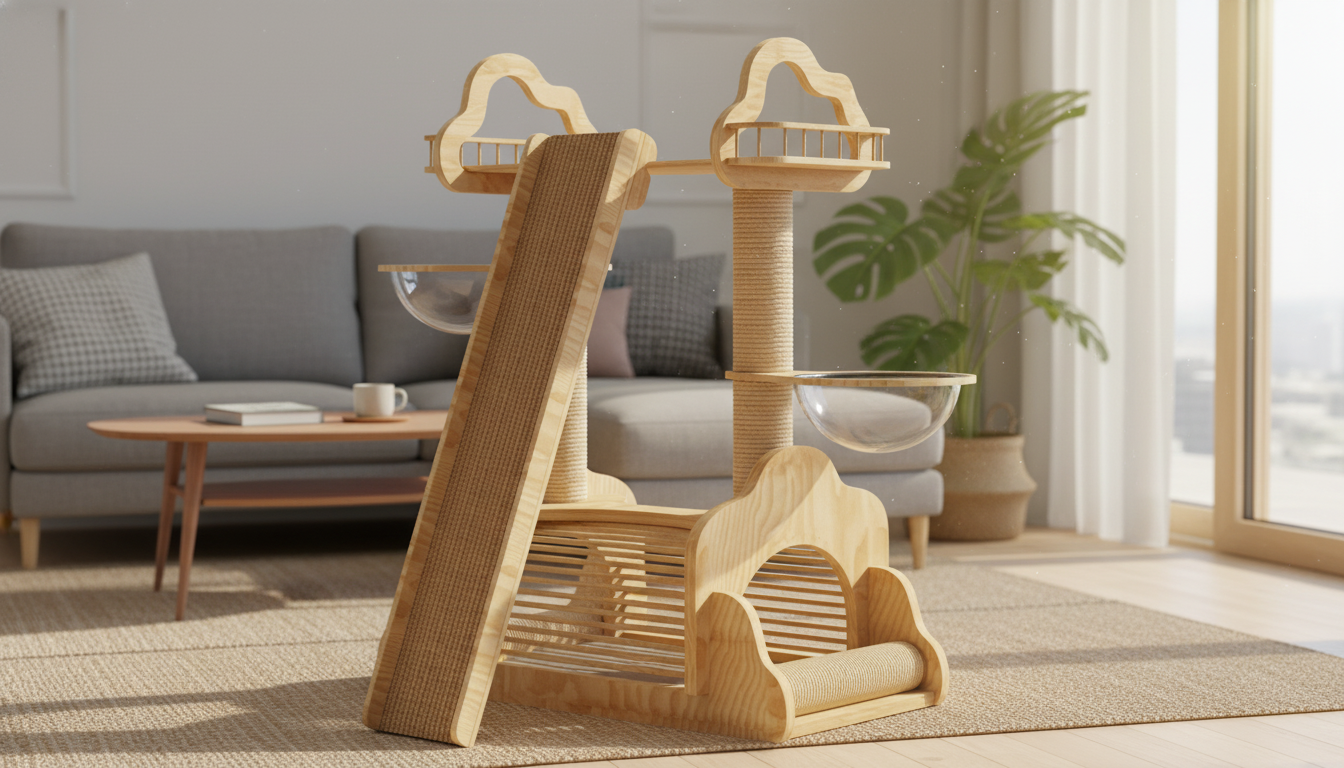
A premium cat tree should look at home in a well-designed space while holding up to daily climbing, stretching, and scratching. Solid wood construction adds stability and long-term durability, and sisal-wrapped posts support healthy scratching habits without sacrificing style. Below are the details that separate a “nice-looking” cat tower from a truly furniture-grade piece—plus practical guidance for placement, upkeep, and choosing a layout your cat will actually use.
Luxury cat trees stand out less by being flashy and more by feeling stable, intentional, and comfortable for everyday use. The best designs combine a sturdy core with finishing details that stay attractive after months of claws and zoomies.
Materials determine how a cat tree feels on day one—and how it behaves after a season of daily use. Solid wood generally provides better rigidity than lightweight composite frames, which helps reduce sway during climbs. Quality also shows up in the joinery: reinforced mounting points and properly anchored hardware minimize platform rotation and post loosening.
Sisal is a standout for scratching because the texture gives claws something to “catch,” which many cats find more satisfying than soft rope substitutes. Look for tight, even wrapping with minimal gaps; sloppy wrapping can snag claws and fray early. Since cats rub their faces and nap close to surfaces, non-toxic finishes and low-odor materials matter for comfort and peace of mind.
| Component | Preferred option | Why it matters | What to watch for |
|---|---|---|---|
| Frame | Solid wood | Improves stability and longevity; supports heavier cats | Soft woods can dent; check thickness and reinforcement |
| Scratching posts | Natural sisal wrap | Encourages scratching; durable texture | Loose wrap, thin rope, or glued ends that lift quickly |
| Platforms/perches | Sturdy wood base with comfortable covering | Reduces sag; supports confident landings | Overly slick fabrics that reduce grip |
| Hardware | Metal fasteners with secure anchoring | Keeps joints tight over time | Short screws, stripped threads, or misaligned holes |
| Base | Wide, weighted footprint | Minimizes tipping and rocking | Narrow base relative to height |
A beautiful cat tree that your cat ignores isn’t luxury—it’s clutter. Cats gravitate toward routes and surfaces that feel predictable underfoot and rewarding to scratch, perch, and rest on.
If a design includes a high perch, ensure there’s a stable “commit point” below it—a platform where your cat can pause, turn, and choose the next move without having to leap blindly.
Where you place a luxury cat tree affects how much it gets used and how well it stays clean. A smart location also helps a premium piece blend into the room like intentional furniture.
For multi-level homes, consider placing the tree where your cat already travels—near a favorite nap spot or along a common hallway—so it becomes part of their daily routine.
Choosing the right size and layout is mostly about matching your cat’s body, habits, and household dynamics. A well-chosen tower feels effortless to use: your cat climbs it without hesitation and scratches it instead of your furniture.
For broader enrichment ideas that complement climbing and scratching, see guidance from the ASPCA and environmental tips from International Cat Care.
If you’re troubleshooting persistent scratching outside the tree, behavior resources from the Cornell Feline Health Center can help you identify common triggers and solutions.
It depends on scratching frequency, cat size, and how tightly the sisal is wrapped, but visible wear often appears after months of daily use. Tight wrapping and encouraging scratching on the intended zones can extend lifespan, and many posts can be re-wrapped when worn.
Solid wood typically offers better stiffness and durability, which reduces wobble and helps joints stay tight longer. Engineered wood can still perform well if it’s thick and well-braced, but it may show edge wear and loosening faster over time.
A good post height lets your cat stand on hind legs and fully extend without hunching. Larger cats need taller posts, and if the built-in post is short, adding a taller scratcher nearby can help prevent furniture scratching.


Leave a comment