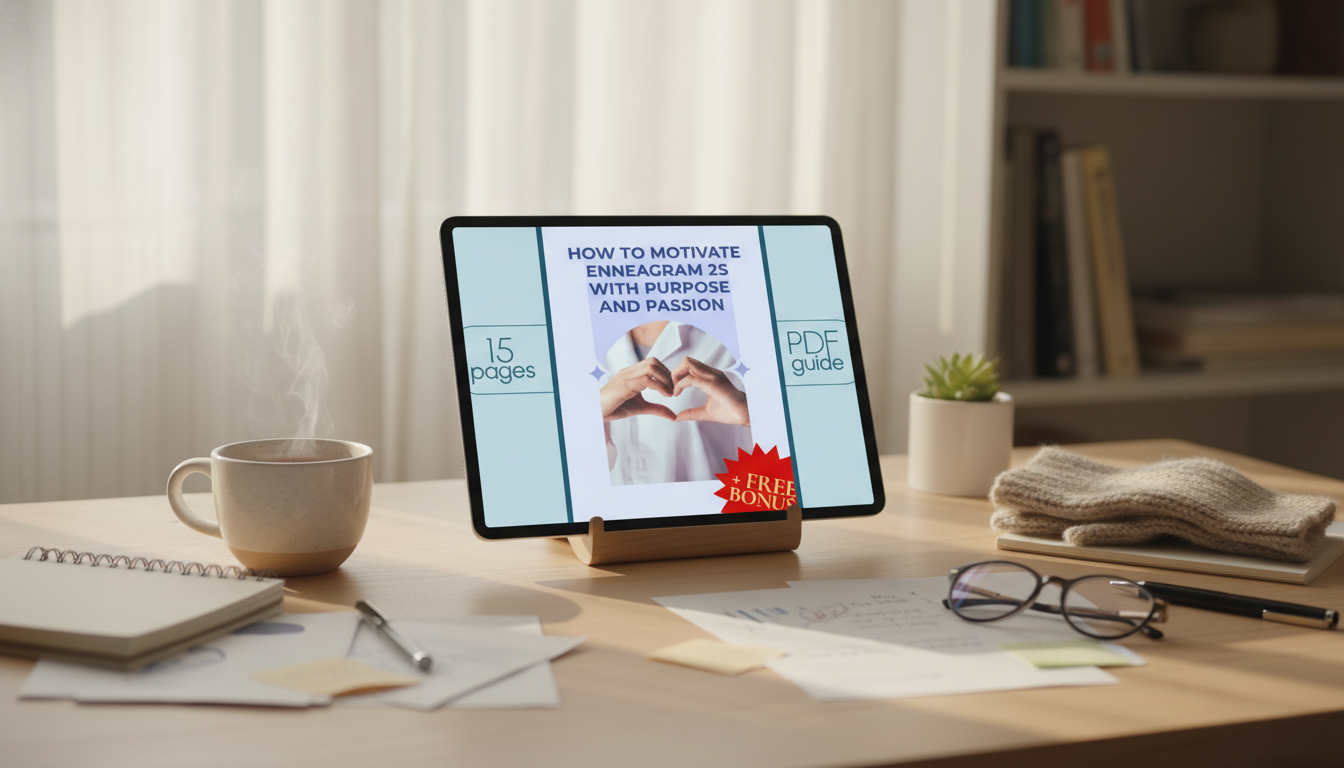
Enneagram 2s (“Helpers”) are energized by being wanted, valued, and connected. Motivation rises when service is paired with clear purpose, honest appreciation, and boundaries that protect their well-being. The goal is sustained passion—without tipping into burnout, over-responsibility, or people-pleasing.
One of the most effective ways to support a Type 2 is to move motivation away from “prove you care” and toward “choose what matters.” When a Helper can see the human impact of their effort—and feel free to opt in with clear limits—their generosity becomes steady and joyful instead of compulsive.
Type 2 energy tends to surge when helping feels personal, relational, and meaningful. That said, passion lasts longer when it’s guided by a shared “why” and a realistic plan.
This aligns with what psychology often describes as intrinsic motivation: sustained energy tends to come from internal meaning and personal values, not only external approval. See the APA definition of intrinsic motivation for a helpful baseline.
Motivating a Helper works best when it’s direct, relational, and mutual. The same warmth that inspires them can also pressure them if expectations stay fuzzy.
| Situation | Works well | Backfires | Try this instead |
|---|---|---|---|
| Asking for help | A specific request with context and a clear end point | Hinting, guilt, or “You’re the only one who can…” | “Would you be willing to do X by Friday? It helps Y. If not, that’s okay.” |
| Giving feedback | Warmth + clarity + appreciation for effort | Critique without acknowledgment or relational repair | “Your care for people really shows. Let’s adjust this part so it lands even better.” |
| Recognizing contributions | Naming impact on people and mission | Only praising self-sacrifice or nonstop availability | “Your follow-up helped the team feel supported. Take a real break today.” |
| Setting boundaries | Mutual agreements and shared responsibilities | Expecting mind-reading or punishing a ‘no’ | “Here’s what we can expect from each other. Let’s revisit if it’s too much.” |
| Preventing burnout | Permission to rest + coverage plan + check-ins | Celebrating overwork as devotion | “Your wellbeing matters. Which tasks can we hand off so you can recharge?” |
When resentment shows up, treat it as information—often it points to an unasked-for need, a vague agreement, or an unspoken hope for appreciation. Addressing it early keeps relationships clean and reduces passive “testing” behaviors (doing more to see if anyone notices).
A simple shift in phrasing can change the emotional weight of a request. “Can you take this on?” can land as a test of devotion. “Would you like to take this on, or should we find another option?” communicates respect and keeps the relationship intact.
If motivation keeps collapsing, it may not be laziness or lack of passion—it may be a chronic mismatch between effort and acknowledgment, or a pattern of giving that ignores genuine capacity.
For a widely referenced baseline on Type 2 patterns, see The Enneagram Institute’s Type Two overview. Compare any tool you choose against this question: does it help a Helper stay loving and free?
In traditional Enneagram teaching, Type 3’s “passion” is deceit—an emotional habit of over-identifying with an image of success and adapting to earn admiration. This differs from Type 2, which tends to focus on relational connection and earning love through helpfulness rather than achievement.






Leave a comment