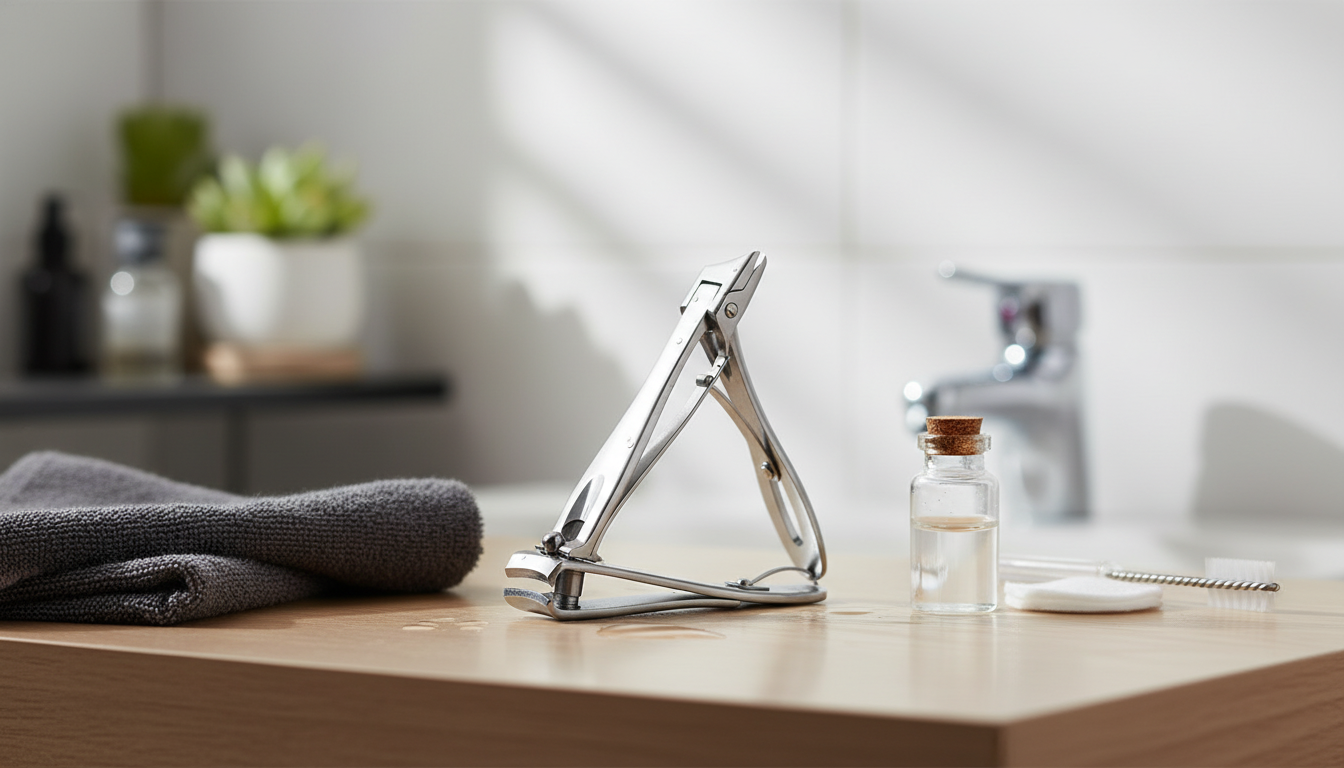
Stainless steel nail clippers are a practical choice for at-home grooming because they combine sharp cutting edges with good corrosion resistance and simple cleaning. The best results come from matching the clipper style to the job (fingernails vs. toenails), choosing a comfortable lever action, and maintaining the blades so they stay aligned and smooth.
Why stainless steel works well for nail clippers
- Better rust resistance in real life: Stainless steel generally resists rust and staining better than many plated metals, especially when stored in humid bathrooms, gym bags, or travel kits.
- Cleaner cuts when the jaws meet correctly: With proper jaw alignment, stainless clippers can hold a crisp edge that trims smoothly and helps reduce splitting and jagged edges.
- Easy to clean without damaging the finish: Routine cleaning with soap and water (and occasional alcohol wipes) is typically well-tolerated without flaking or peeling.
- Solid feel for more control: The weight and rigidity of stainless steel can help the tool feel stable in hand, which supports precise trimming.
- Design still matters as much as the metal: Pivot stability, grind quality, and jaw alignment often determine performance more than the alloy name alone.
Types and shapes: pick the right clipper for the job
Nail clippers aren’t one-size-fits-all. A clipper that feels perfect for quick fingernail touch-ups can struggle on thick toenails, while a heavy-duty toenail clipper can feel clumsy for detail work.
- Standard lever clippers: The familiar all-purpose style; ideal for most fingernails and routine maintenance.
- Wide-jaw toenail clippers: A wider opening and higher leverage can make thick nails easier to manage.
- Curved vs. straight edges: Curved edges follow the natural shape of nails; straighter edges can be helpful on toenails to avoid over-curving into corners.
- Angled head clippers: Designed to improve visibility and access, especially for corners or when flexibility is limited.
- Built-in file and catcher: A file is convenient for quick smoothing; a catcher can reduce mess but may add crevices that require more thorough cleaning.
Quick guide to common clipper styles
| Style |
Best for |
What to watch |
| Standard lever clipper |
Fingernails, general use |
Jaw alignment; comfortable lever tension |
| Wide-jaw clipper |
Thicker nails, many toenails |
Bigger cuts can snag if blades are dull |
| Angled-head clipper |
Corners and precision |
Grip quality; head stability |
| Clipper with catcher |
Mess reduction |
More crevices to clean |
How to choose: the details that affect comfort and results
Stainless steel grades and what they mean (without overthinking it)
For a broader overview of stainless steel families and why properties vary, see ASM International’s stainless steels resources.
Best practices for trimming fingernails and toenails
- Soften nails first: Trim after a shower or soak hands/feet for a few minutes. Softer nails cut with less force and may be less likely to crack.
- Use small cuts: Take several small clips rather than one big bite—especially on toenails. This helps keep the edge controlled and reduces the chance of splitting.
- Shape thoughtfully: Follow the natural curve on fingernails. For toenails, aim for a gentler shape (less aggressive curve) to reduce corner pressure.
- Finish with a file: A few light strokes smooth rough edges so they don’t snag on socks or sheets, and it can reduce peeling.
- Know when to pause: If nails are very thick, painful, discolored, or ingrown, forcing a clip can worsen injury. Guidance on when to seek care can be found at the Cleveland Clinic’s ingrown toenail resource.
Cleaning, disinfection, and rust prevention
- Routine cleaning: Wash with warm water and soap, rinse, then dry thoroughly—especially around the pivot and under any catcher.
- Disinfection option: Wipe blades with 70% isopropyl alcohol and let air-dry. Avoid soaking the mechanism for long periods unless the tool is specifically designed for it.
- Prevent corrosion and stiffness: Keep clippers dry between uses. A tiny drop of light oil at the pivot (then wipe excess) can keep action smooth.
- Don’t share tools: Sharing increases the risk of transferring fungi or bacteria. For general prevention guidance, see the CDC’s fungal nail infections information.
Maintenance checklist
| Task |
How often |
How |
| Wash and dry |
After use (or weekly) |
Soap + water, rinse, dry fully |
| Alcohol wipe |
As needed |
70% isopropyl alcohol, air-dry |
| Pivot lubrication |
Monthly (or when stiff) |
1 small drop, open/close, wipe excess |
| Inspect alignment |
Monthly |
Close jaws and check for gaps or nicks |
FAQ
Are stainless steel nails good?
The phrase “stainless steel nails” often refers to construction fasteners, which are valued for corrosion resistance in damp or outdoor environments. For grooming tools like nail clippers, stainless steel is also a good choice because it resists rust and is easier to clean than many plated alternatives.
Are stainless steel nails Type 304 or 316?
Construction nails can be made from different stainless grades, and 304 or 316 are common depending on the corrosion exposure. Nail clippers may use different stainless alloys, and real-world performance is usually driven by blade alignment, heat treatment, and regular drying/cleaning more than the grade label alone.
Can you get stainless steel nails for a nail gun?
Yes—stainless steel nails are available for many nail guns, typically chosen for exterior projects or humid environments where corrosion resistance matters. The best type depends on the tool’s specifications and the conditions the fasteners will face.
Recommended for you




Leave a comment