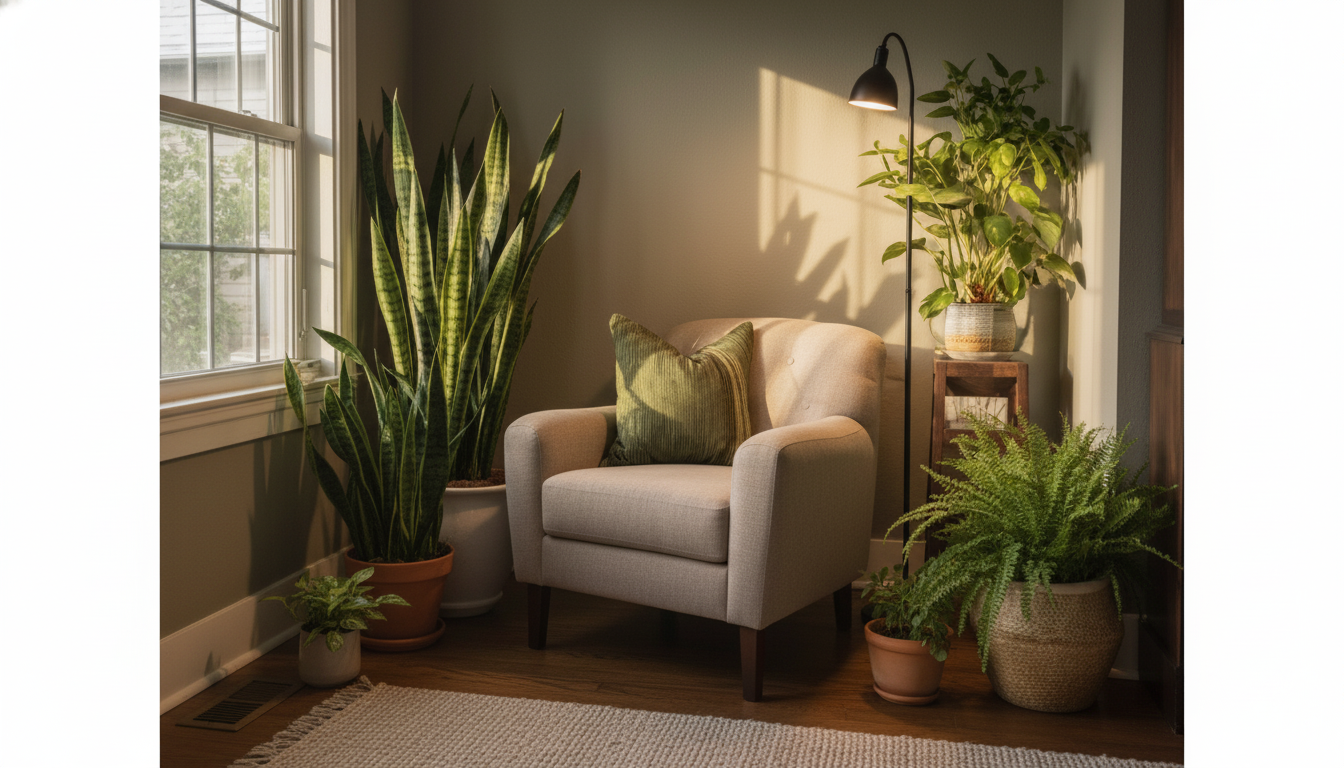
A well-styled plant corner can soften hard edges, brighten dim spaces, and add a calming daily rhythm through care and growth. The most satisfying corners balance light, plant needs, and a few intentional design choices—so the space feels alive without feeling cluttered.
The difference between a plant corner that feels soothing and one that feels chaotic usually comes down to structure. Start by giving the corner a clear purpose—maybe it’s a reading nook, a meditation spot, an entryway welcome, or a workspace reset. Once the purpose is set, build a simple visual “triangle”: one tall plant, one mid-height plant, and one trailing plant. This creates natural flow and keeps the eye moving gently rather than bouncing between unrelated items.
Leave breathing room around leaves. Negative space is part of the design; it helps the corner feel restful instead of busy. To keep things cohesive, limit your palette to 2–3 repeating materials (like wood, ceramic, woven fibers, or matte metal). Finally, aim for gentle movement—an airy fern or a trailing vine adds life without adding visual noise.
Before choosing plants or pots, read the room. Map the light for one full day: note when the window is brightest and whether harsh afternoon sun hits the corner. Then consider traffic flow. A beautiful plant corner won’t feel peaceful if you’re constantly sidestepping pots or snagging fronds and trailing stems while walking by.
Temperature stability matters more than most people expect. Try to avoid corners blasted by HVAC vents or drafty doors; consistent conditions support steady growth and reduce leaf drop. Protect nearby floors and furniture with trays or saucers, and if watering happens in place, a washable rug can save stress. Most importantly, plan for access: you should be able to water, prune, and rotate pots without moving everything like a puzzle.
| Home condition | What to prioritize | Corner setup tip |
|---|---|---|
| Low natural light | Plants that tolerate shade and slower growth | Use lighter-colored pots and a reflective surface to lift brightness |
| Bright indirect light | Most foliage plants thrive here | Layer heights with a stand and a trailing plant for depth |
| Direct sun for 3–6 hours | Sun-loving species and sun-safe materials | Use a sheer curtain to soften hot rays and prevent scorch |
| Busy walkway | Durable, upright plants | Choose narrower pots; keep trailing plants higher to avoid tangling |
| Pet-accessible area | Pet-safe choices and stability | Use heavier planters, wall shelves, or a plant cabinet for separation |
A plant corner doesn’t need a big haul of new items. A better approach is to choose a “system” you can maintain: the right light match, a repeatable pot style, and enough space for growth.
Once the corner conditions are clear, select plants that fit the environment and each other. For visual interest, combine textures: broad leaves (like a rubber plant), fine fronds (like certain ferns), and a structural silhouette (like a snake plant). Keep scale in mind—one statement plant plus a handful of supporting plants often feels more curated than a crowd of small pots.
Choose a “hero” plant that anchors the scene (a tall floor plant or tree-form plant), then build around it with mid-height foliage and one trailing plant to soften edges. To make care easier, group plants with similar watering rhythms so you’re not guessing every time. If you’re new to houseplants, resilient options like pothos, snake plant, ZZ plant, spider plant, and many philodendrons are often forgiving—just confirm pet safety when needed using a reliable reference like the ASPCA plant database.
For deeper care guidance and reliable houseplant basics, the Royal Horticultural Society houseplants resource is a strong reference.
For most homes, 3–6 plants is a practical range. Aim for one anchor plant plus a few supporting plants at different heights, and leave negative space so the corner still feels calm.
Choose low-light-tolerant plants and brighten the look with lighter pots or reflective surfaces. If the space is truly dim, a small grow light on a timer can help—areas with no real light at all usually won’t support live plants long-term.
Limit pot finishes and repeat 2–3 materials for cohesion. Use height variation for structure, then add just one focal decor piece while keeping surfaces mostly clear so greenery remains the main feature.




Leave a comment