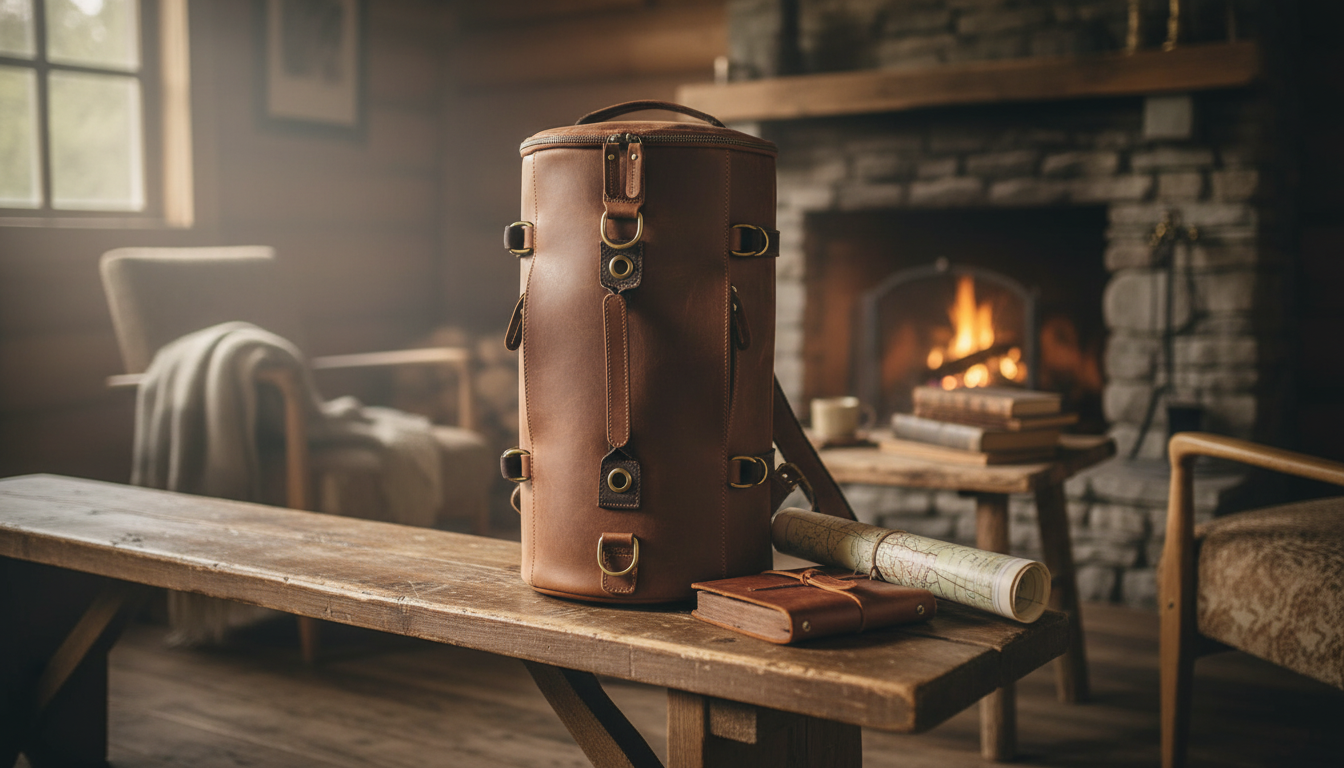
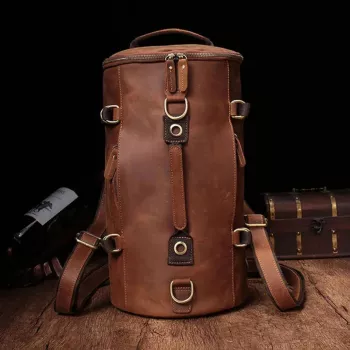
A bucket-style leather backpack blends old-school character with modern practicality: a roomy main compartment, quick-access pockets, and a silhouette that works with casual, smart-casual, and travel outfits. The right choice depends on leather type, carry comfort, closure security, and how well the size fits daily essentials.
Compared with more structured, boxy leather backpacks, a bucket backpack is built around a simple, cylindrical “drop-in” main compartment. That shape changes how it packs, how it moves with you, and how it looks on-body.
For everyday use, the biggest advantage is speed: you can drop in a small jacket, a water bottle, or a camera without fighting corners. The trade-off is organization—bucket openings can become “one big compartment” unless the interior and exterior pockets are thoughtfully designed.
Leather is the headline feature, but the longevity of a backpack comes from the whole build: hide quality, stitching, hardware, and lining all work together.
If you can inspect a bag in person, run your fingers along the top rim and strap attachment points; those are high-stress areas that reveal whether the construction is made for daily wear. For care fundamentals like conditioning intervals and safe cleaning methods, reliable guidance from a dedicated leather-care resource can help build a simple routine over time.
Leather care basics (conditioning, cleaning, storage)
A bucket backpack can be deceptively roomy, so it helps to think in terms of “everyday load” rather than pure liters. The best setup keeps essentials easy to reach while still letting you carry bulkier items when needed.
| Feature | Why it matters | What to check |
|---|---|---|
| Top closure | Controls access and keeps items secure | Drawstring + flap, buckle, or zipper; closure should feel firm |
| Strap comfort | Prevents shoulder fatigue on long days | Padding, width, and smooth strap edges; no sharp hardware contact |
| Back panel | Improves comfort and airflow | Soft backing, optional breathable panel, stable shape |
| Organization | Keeps essentials easy to find | At least one internal zip pocket + one quick-access pocket |
| Base reinforcement | Reduces sagging and wear | Thicker leather, feet, or structured bottom panel |
| Water protection | Helps in light rain and spills | Finished leather, protective coating, and covered seams |
Leather backpacks can look refined and still feel comfortable, but only if the carry system matches your body and routine. Small differences—strap edge finishing, padding density, and where the bag sits—become obvious during long commutes.
When testing a fit, load the bag with a realistic weight. If the straps bite near the collarbone or the bag bounces with each step, a different strap design or a slightly smaller capacity can feel dramatically better.
A vintage leather bucket backpack is a statement piece, but it doesn’t need the rest of the outfit to lean “heritage” to work. The cleanest looks treat the backpack as texture and tone rather than as a theme.
Transportation Security Administration (TSA) – Traveling with bags and screening considerations
It depends on the backpack’s interior dimensions and whether it includes a padded laptop sleeve. Measure your laptop and compare it to the bag’s stated compartment size, and prioritize wider, comfortable straps if you’ll carry that weight often.
Most finished leather can handle light rain, but it shouldn’t be soaked. If it gets wet, air-dry it away from direct heat and condition later if the leather feels dry; in heavy rain, use an umbrella or a pack cover.
Look for a reinforced base or structured bottom panel, and pack heavier items centered and closer to your back. When storing, lightly stuff the bag to maintain its shape and reduce long-term slouching.



Leave a comment