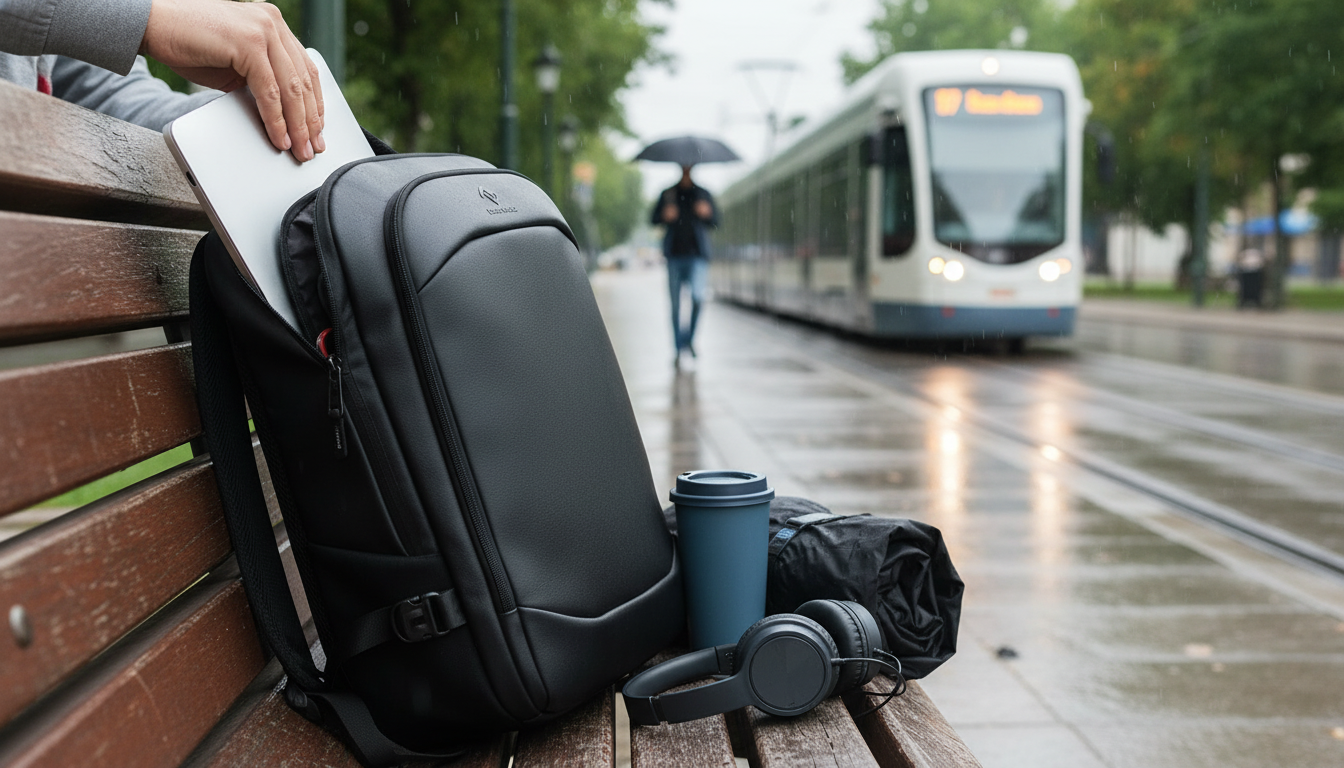
A travel backpack has to balance laptop protection, weather resistance, comfort, and smart organization—especially when you’re carrying a larger 17-inch device. The right bag should keep electronics safe through rainy commutes, move smoothly through airport security, and pack efficiently for a quick overnight. Below is a practical breakdown of what to look for, how “waterproof” performs in real-world conditions, and how to set up your carry for daily use and short trips.
“Waterproof” can mean different things depending on the materials and construction. A backpack that shrugs off a drizzle may still let water creep in during a long walk in steady rain.
If you’re comparing product specs, it can also help to understand how IP (Ingress Protection) ratings work for electronics and enclosures; while backpacks aren’t typically IP-rated, the framework is useful for thinking about dust and water exposure. See the official overview from the IEC: IP Code (Ingress Protection) explained.
With larger laptops, the details matter more than the label. “Fits 17-inch” can be accurate for one model and tight for another.
| Check | Why it matters | What to look for |
|---|---|---|
| Sleeve size | Avoids tight fit and zipper strain | Room for a case/skin and protected corners |
| Suspended base | Reduces drop impact | Visible bottom clearance inside the sleeve |
| Side protection | Stops edge dings | Foam panels along both sides |
| Top protection | Prevents zipper-to-lid contact | Padded lip or device “garage” zone |
| Stability | Less shifting while walking | Compression or a snug sleeve shape |
When flying, it also helps to stay aware of airline carry-on size rules and enforcement trends. The TSA’s travel FAQ page provides a helpful starting point for navigating carry-on questions and related links: Carry-on baggage size limits (overview and airline links).
| Use case | What to pack | Pocket strategy |
|---|---|---|
| Airport day | Laptop, charger, passport, headphones | Laptop sleeve + quick-access pocket for documents |
| Rainy commute | Laptop, umbrella, lunch, bottle | Keep bottle in an outer pocket; tech in a separated compartment |
| Weekend trip | Clothes, toiletries, laptop | Main compartment for clothes; isolate liquids in a sealed pouch |
For deeper cleaning and coating care principles (especially useful if your backpack uses waterproof/breathable fabrics), REI’s guidance is a solid reference: How to clean and care for waterproof/breathable gear.
The “best” depends on whether you need it for commuting, airline travel, or outdoor use. Look for proven waterproofing through coated fabrics, sealed construction, and dependable closures, then validate with durability reports and repeat-use feedback rather than marketing terms alone.
Strong brands usually publish clear material specs, stand behind warranties, and use consistent seam and zipper construction. Brand reputation is useful, but it should be weighed against whether the bag’s waterproof level and layout match your typical conditions and carry.
Fully waterproof packs commonly use roll-top closures and welded seams, which can outperform zipper-heavy designs in sustained storms. The trade-off is slower access and fewer external pockets, so the “most waterproof” choice isn’t always the most convenient for airports and daily commuting.



Leave a comment