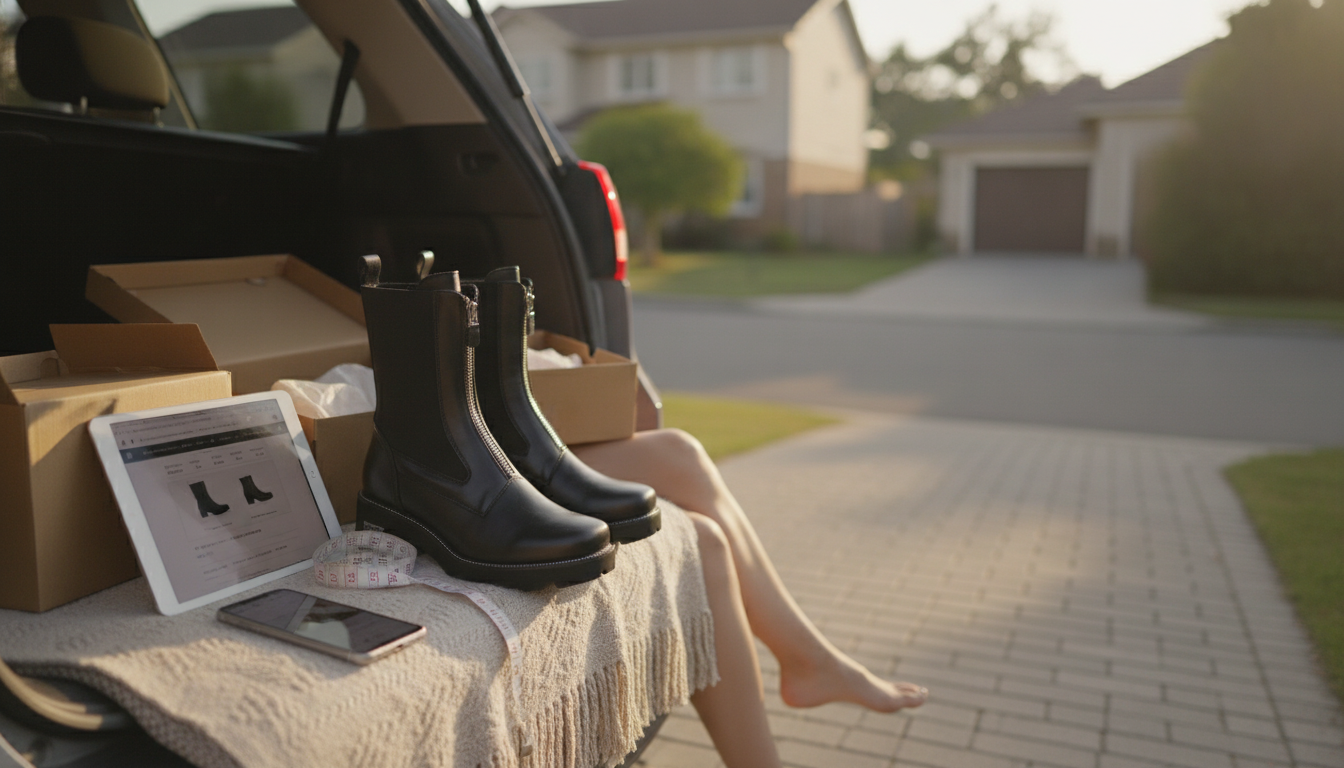
Start with measurements, not your usual sneaker size. Leather ankle boots often fit differently because of structured uppers, thicker soles, and less “give” at first wear. With a few quick checks—foot length, width, sock thickness, and the brand’s fit notes—you can dial in the right size before you click “Buy.”
Place a sheet of paper on the floor against a wall, stand with your heel lightly touching the wall, and trace your foot. Measure from the wall to the longest toe in inches or centimeters. Repeat for the other foot and use the larger measurement. If you plan to wear thicker socks, measure with those socks on.
Don’t assume a “true to size” claim replaces a chart. Use your length measurement to find the closest match, then read the product’s fit guidance: ankle boots with a narrow toe box, pointed toe, or higher instep can feel smaller even when the length is correct. If a style is known to run small, sizing up a half size is often the safest move—especially if you’re between sizes.
If you have wider feet or a high instep, prioritize styles with a rounder toe, a side zipper, stretch panels, or adjustable lacing. Also check shaft and ankle opening details: a snug opening can make a boot hard to get on even if the footbed fits.
Leather can soften and mold slightly, but it won’t reliably “grow” in length. If your toes are pressed at the front or you feel numbness, that’s a sizing issue, not a break-in phase.
For deeper tips on fit, traction, and care, visit this complete guide to women’s leather ankle boots.
A little snugness around the sides can be normal, but they shouldn’t pinch your toes or cause numbness. Leather may soften with wear, yet a too-short length usually won’t improve.



Leave a comment