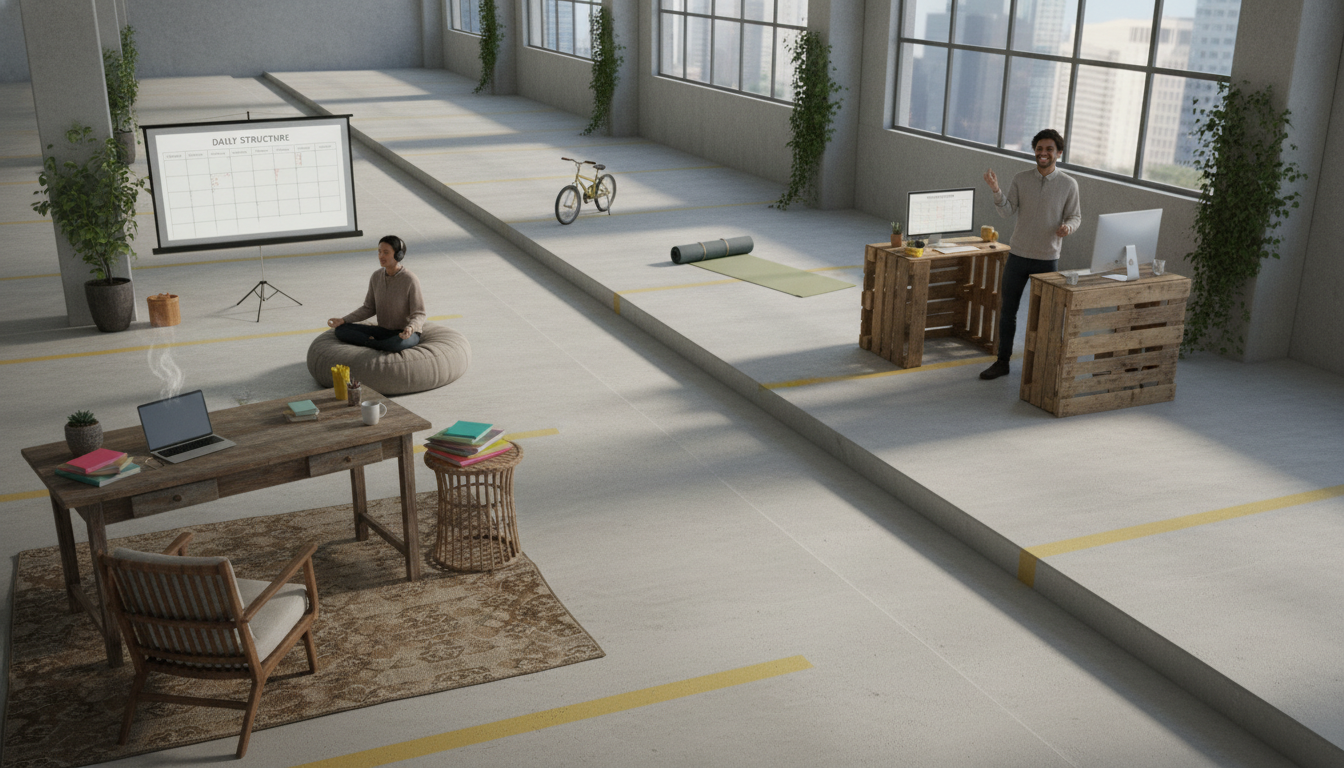
Working from home can feel freeing one day and strangely draining the next. Motivation usually drops when your brain can’t tell where “home” ends and “work” begins, or when the day has no clear starting line. The fix isn’t willpower—it’s structure that makes progress easier than procrastination.
Pick a consistent start time and create a short pre-work routine (coffee, quick walk, tidy desk, open your top task). Small cues tell your brain it’s time to focus, even without a commute. If possible, work in one dedicated spot, even if it’s just a specific chair and table you only use for work.
Instead of a massive to-do list, choose one must-finish task (your “win”) and two smaller tasks. This keeps the day from feeling endless and gives you an early momentum boost. If the big task feels intimidating, break it into the smallest visible next step—something you can complete in 10–15 minutes.
Motivation rises when distractions drop. Try a simple rhythm: 25–50 minutes focused work, then a 5–10 minute break. During focus time, silence nonessential notifications and keep a “distraction list” nearby—write down random thoughts or errands so you can return to them later without derailing your session.
Accountability doesn’t have to be formal. A quick daily check-in with a coworker, a shared status message, or even a visible checklist can increase follow-through. Pair effort with a reward you actually want—your favorite snack, a short walk, or a guilt-free episode—after completing your priority task.
Light, temperature, and clutter affect drive. Open blinds, keep water nearby, and do a two-minute reset at the end of the day so tomorrow starts clean. If afternoons are a slump, schedule lighter admin work then and save deep work for your best hours.
For more practical tactics and examples, read the full guide here: How do I motivate myself working from home?
Make the first step so small you can’t talk yourself out of it, then work in short timed blocks. Remove one major distraction (like phone notifications) and commit to finishing just one “must-do” task before checking anything optional.





Leave a comment