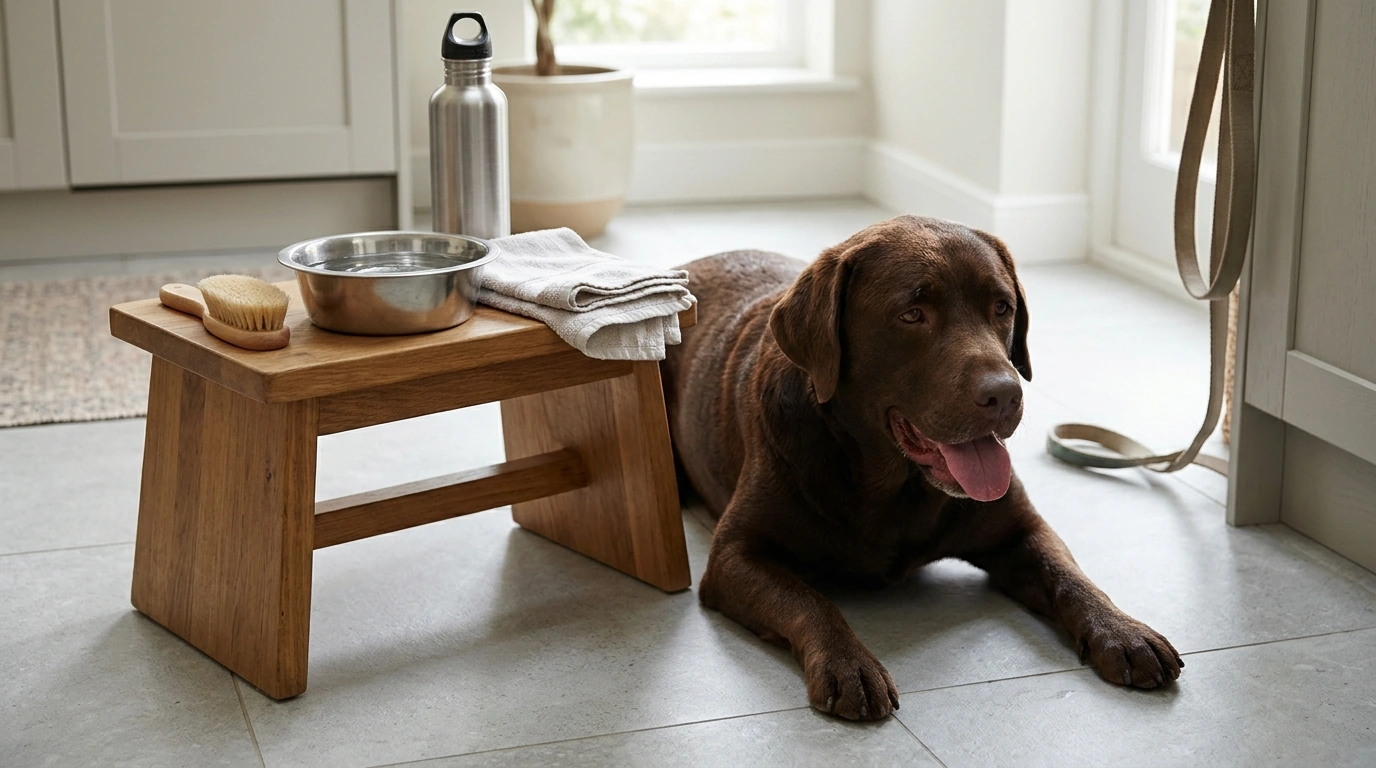
The seven common signs of heat exhaustion in dogs are excessive panting, drooling, red gums, weakness, vomiting or diarrhea, confusion, and collapse. You may notice several signs at once, and they can progress quickly to life-threatening heatstroke.
Heat exhaustion can happen during exercise, on a hot or humid day, or in an enclosed space without adequate ventilation. Our team recommends treating any suspected overheating as urgent, especially in puppies, older dogs, flat-faced breeds, and dogs with heart or breathing problems.
Not every dog will show all seven signs. If your dog is overheating, act before symptoms become severe.
Move your dog into shade or an air-conditioned space immediately. Pour cool, not ice-cold, water over the body and use a fan or airflow to help cooling. Offer small amounts of cool water if your dog is alert and able to drink, but do not force water into the mouth.
Call a veterinarian right away and arrange prompt care. If your dog has collapsed, seems confused, or has trouble breathing, head to an emergency veterinary clinic immediately while continuing to cool them. Do not delay transport to wait for symptoms to improve.
For more on recognizing a serious heat emergency and getting help, see our guide to heatstroke signs and emergency care in dogs.
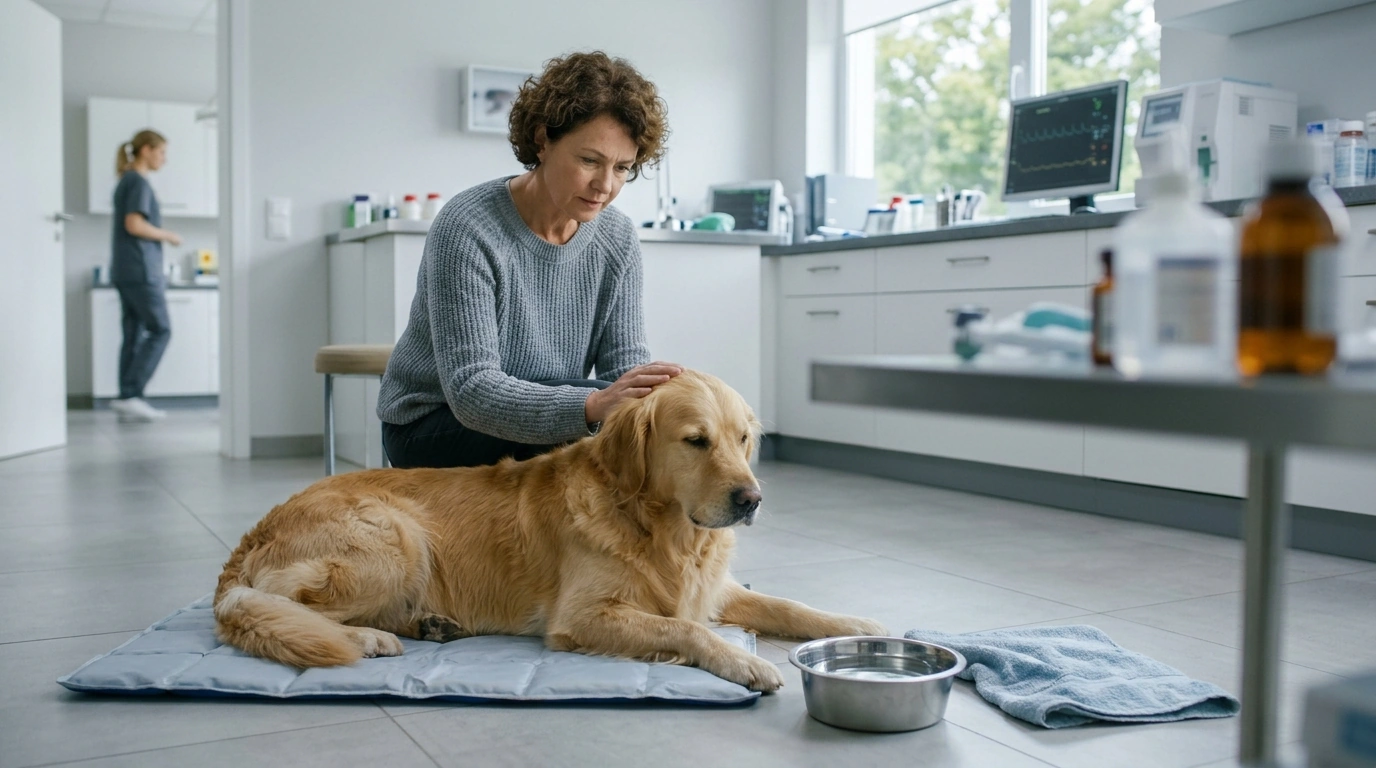
Provide fresh water and shade, avoid strenuous exercise during the hottest hours, and never leave your dog in a parked car. For outings, a portable water bowl makes it easier to offer frequent drinks; a cooling mat can provide a cool resting surface, but it is not a substitute for shade, ventilation, or veterinary care.
Begin cooling your dog immediately with cool water and airflow, then contact a veterinarian for prompt care. Overheating can cause internal damage even if your dog appears to recover.
A dog cannot tell you how they feel, but early signs may include heavy panting, extra drooling, restlessness, and slowing down. Move your dog somewhere cool and call your veterinarian if you suspect overheating.





Leave a comment