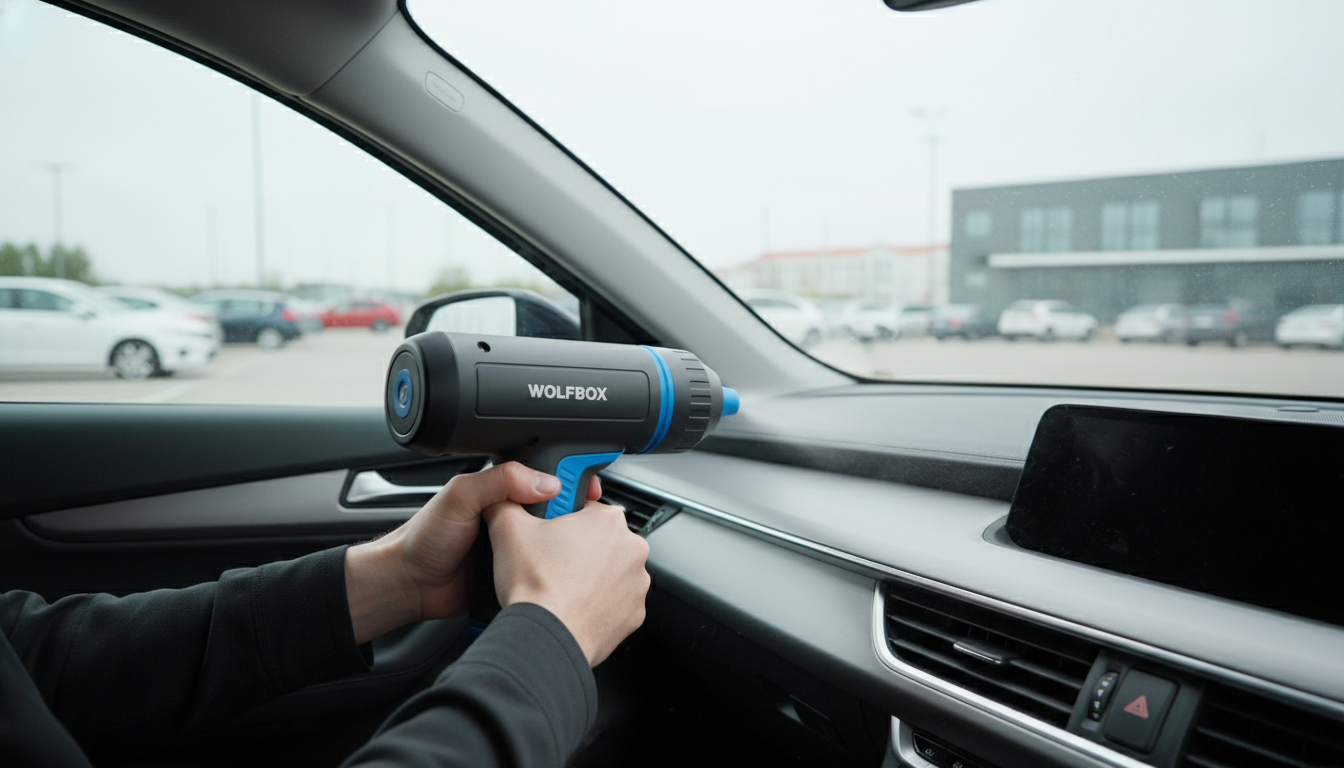
How long a Wolfbox air duster lasts depends on two “lifespans”: how long it runs per charge and how long the tool holds up over months and years of regular use. In day-to-day terms, most people care about runtime first—whether it can finish a PC clean-out, a car detailing session, or a quick keyboard dusting without needing a recharge.
On a full charge, a Wolfbox-style rechargeable air duster typically runs for a short cleaning session to several sessions, depending on the speed setting and battery size. Higher RPM modes drain the battery faster, so sustained max-power blasting will cut runtime noticeably, while lower or mid settings can stretch it enough for multiple quick tasks.
For overall durability, a quality handheld air duster can last a long time if it’s used and maintained properly. The biggest factors are heat buildup, filter and intake cleanliness, and how hard it’s pushed at top speed. Keeping the air path clear, avoiding long continuous runs at maximum, and letting the unit cool between heavy jobs helps protect the motor and battery.
To get the most life out of it, charge it with the recommended charger, avoid storing it fully drained for long periods, and keep the intake free of lint and debris. If you mainly use it for keyboards, PC vents, console ports, and car crevices, it’s common for the unit to stay reliable for a long stretch before you notice reduced battery capacity.
If you want a deeper walkthrough on choosing the right RPM, battery capacity, and best-use scenarios for cleaning electronics and interiors, see the full guide here: https://splendona.com/guide-130000rpm-handheld-air-duster-pc-car-home-guide/.
Yes—rechargeable air dusters can replace canned air for most PC cleaning, especially for vents, filters, and heatsinks. Use controlled bursts, hold fans in place to prevent overspin, and avoid forcing debris deeper into components.


Leave a comment