
It depends on what you’re inflating, how often you do it, and how quickly you need to get back on the road or trail. A “tire inflator” is typically a compact 12V unit designed mainly for topping off tires. An “air compressor” usually refers to a larger, more powerful compressor (often portable or shop-style) that can handle higher airflow and longer run times—sometimes for tools as well as tires.
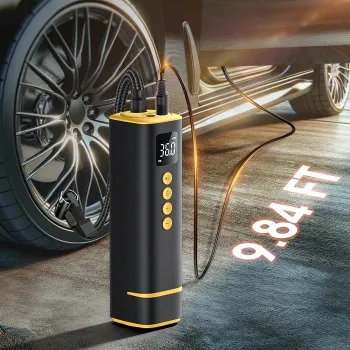
A portable tire inflator is the better buy for everyday drivers who mainly need emergency support or periodic pressure corrections. These units are smaller, easier to store in a trunk, and often include a digital gauge, preset PSI, and auto-shutoff. They’re ideal for passenger vehicles, light crossovers, and seasonal pressure changes. The tradeoff is speed: they can be slower on larger tires and may need cool-down breaks if used continuously.
If you drive a truck, tow, run larger all-terrains, or air down for off-road trips, a more capable compressor is worth it. Higher-output compressors move more air (faster inflation), tolerate longer duty cycles, and handle repeated fills without overheating as quickly. They’re also more versatile for inflatables and certain accessories, depending on the model. The tradeoff is size, cost, and sometimes the need for clamps to the battery rather than a simple 12V plug.
Start with your tire size and how low you expect to inflate from. The bigger the tire and the larger the PSI jump (for example, airing up after off-roading), the more you’ll appreciate higher airflow and duty cycle. Also consider accuracy: a digital monitor or reliable gauge helps prevent uneven handling and premature tire wear. For practical guidance on pressure targets and choosing a capable inflator for higher-PSI situations, see this off-road tire PSI and inflator guide.
It depends on vehicle weight, tire type, and terrain, but many drivers air down for traction and ride comfort, then air back up before pavement. Use conservative steps, watch for sidewall bulge, and reinflate to your normal road pressure before driving at speed.





Leave a comment