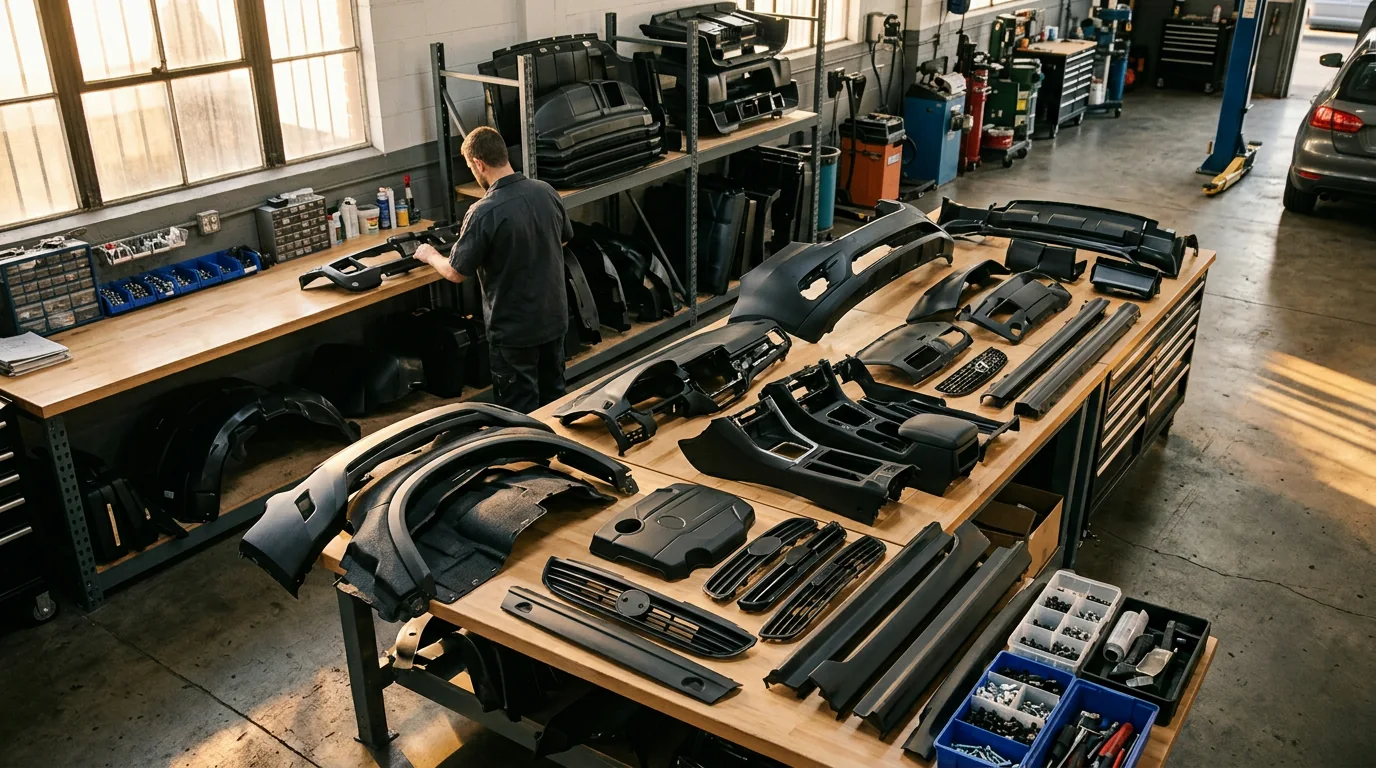
The plastic parts of a car are commonly called plastic trim, though individual pieces have more specific names. Exterior examples include bumper covers, wheel arch trim, mirror housings, and grille surrounds. Inside, you will find dashboard panels, door panels, consoles, and other molded components.
When you are shopping for a replacement or a care product, the most useful name depends on the part’s location and purpose. “Trim” often describes a visible finishing piece, while a structural or protective component is usually identified by its specific name.
Exterior plastic components can protect the body, improve airflow, or finish the appearance of the vehicle. Common names include:
Some exterior pieces are painted, while others have an unpainted black or textured finish. That distinction matters when choosing a cleaner or restorer.
Interior plastic parts are generally grouped under interior trim. This includes dashboard trim, door panels, center console panels, pillar covers, and vent surrounds. You may also hear “fascia” used for a dashboard or center-stack panel.
Not every surface that looks like plastic is hard plastic. A dashboard or door panel may have vinyl, leather, fabric, or a soft-touch coating, so choose a product suited to the actual surface.
Our team recommends cleaning the surface first and letting it dry before applying a trim product. For unpainted exterior black plastic, choose a restorer intended for that finish and follow its application instructions. Keep dressings off glass, tires, pedals, and other surfaces where residue could affect visibility or grip.
For more guidance on restoring the look of dark trim, see our guide to black plastic and leather restorers.
Use it inside only if the product directions say it is suitable for interior surfaces. An interior-specific cleaner or protectant is a better choice when an exterior formula is not approved for cabin use.





Leave a comment