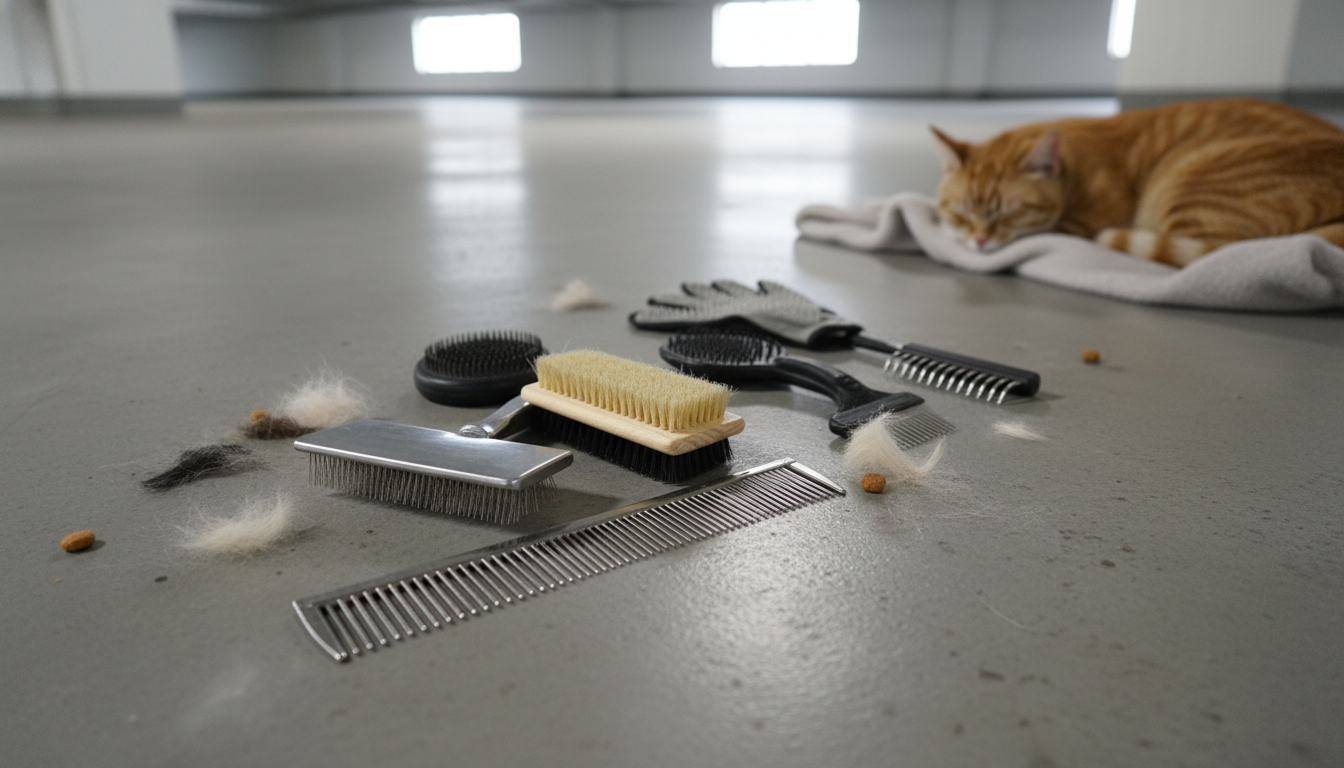
The best brush for a shedding cat depends on coat length, how dense the undercoat is, and how sensitive your cat’s skin feels during grooming. In most homes, a two-tool approach works best: an undercoat-focused tool to pull loose fluff, plus a gentle finishing brush to smooth the coat and catch strays.
For many short-haired cats, a rubber curry brush (or a grooming glove with soft rubber nubs) is the easiest place to start. It lifts loose hair without scratching, helps distribute natural oils, and tends to be well tolerated by cats that dislike bristles. Use light pressure and short strokes along the body, then wipe or rinse the tool to remove hair buildup.
If your cat has a longer coat, a quality slicker brush is a go-to for daily shedding control because it reaches deeper into the coat and gathers loose hair before it turns into tangles. Follow with a wide-tooth metal comb to check for remaining snags (especially behind the ears, under the collar area, armpits, and the base of the tail). If the comb catches, slow down and work small sections rather than pulling.
Cats with thick undercoat (common in many long-haired and double-coated cats) often benefit from an undercoat rake designed for felines. Use it gently, keep sessions short, and stop if you see redness or your cat becomes uncomfortable. Avoid over-brushing one spot—several light passes are safer than digging in.
During peak shedding, aim for a few minutes most days. For lighter shedding, 2–3 times per week is often enough. A calm routine—treats, a favorite perch, and stopping before your cat gets annoyed—usually beats longer sessions.
For a deeper breakdown by coat type and tool pros/cons, see the full guide here: https://splendona.com/what-brush-to-use-for-shedding-a-cat/.
Feed a balanced diet, keep your cat well-hydrated, and use regular grooming to remove loose hair before it drops. If shedding seems sudden or excessive, a vet check can rule out skin issues, parasites, or stress-related causes.





Leave a comment