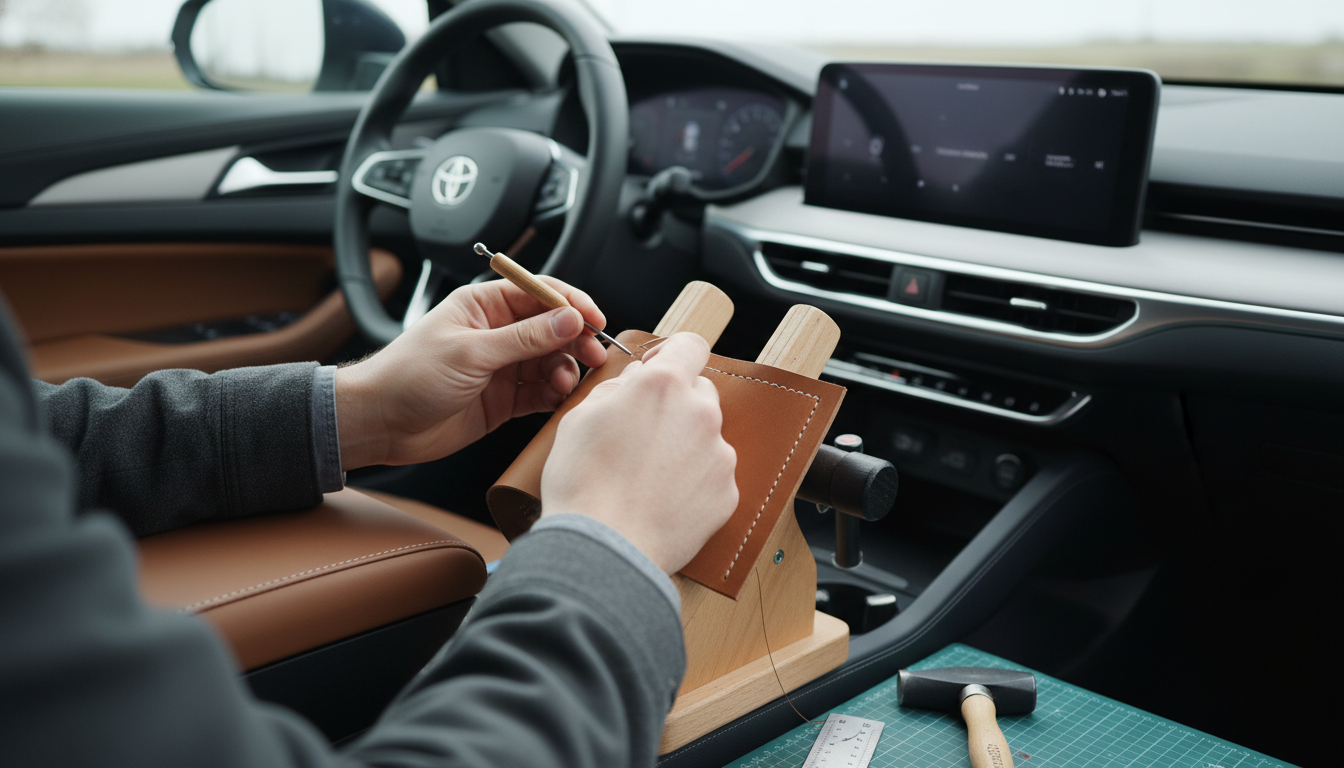
The most reliable way to stitch two pieces of leather together is a saddle stitch: two needles, one thread, and alternating passes through the same holes. It’s the go-to method for wallets, belts, bags, and repairs because each stitch locks independently—so if one spot gets cut or worn, the seam doesn’t unravel like many machine stitches can.
1) Align and prepare the seam. Mark your stitch line and keep both layers flush. For clean edges, glue or tape the layers lightly before stitching so nothing creeps as you work.
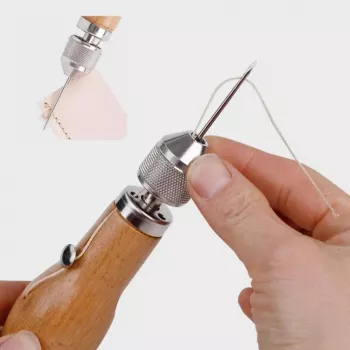
2) Punch evenly spaced holes. Leather should be punched, not “sewn through.” Use an awl or pricking irons/chisels to make consistent holes along the line. Even spacing and straight holes do more for strength and appearance than rushing the sewing.
3) Use the right thread and needles. Waxed polyester or nylon thread is common for durability and moisture resistance. Pair it with blunt leather harness needles (so you don’t split the thread or enlarge holes unintentionally).
4) Stitch with two needles. Thread a needle on each end of the same length of thread. Start by pulling the thread through the first hole until both sides are even. For each hole: pass the left needle through, then pass the right needle through the same hole from the opposite side. Pull both ends snug to set the stitch—firm, not so tight that it puckers the leather.
5) Backstitch and finish. At the end, backstitch 2–3 holes to lock the seam. Trim the thread close and lightly melt synthetic thread ends (if applicable) or tuck/hammer them down for a neat finish. A quick tap with a smooth hammer can help the stitches sit flatter and look more uniform.
If you’re joining thick leather with bulky seams, lacing or a baseball stitch can add flexibility and visual detail. For thin leather or decorative work, a running stitch can be faster, but it’s generally less secure than saddle stitching for high-stress items.
For tool recommendations and step-by-step hand-sewing tips, visit the full guide here: https://splendona.com/guide-heavy-duty-leather-canvas-hand-sewing-kit-guide/.
Waxed polyester thread is a strong, low-stretch option that resists abrasion and moisture. Choose a thickness that matches your hole size—too thick frays and fights the holes, too thin can look uneven and wear faster.



Leave a comment