
A bench is typically a structured seat designed for sitting—often with a longer, firmer profile and enough support for multiple people. An ottoman is usually a cushioned, low piece meant primarily as a footrest, though many are sturdy enough to serve as extra seating or a soft surface for a tray.
Most benches are made for upright seating at an entryway, dining table, or the foot of a bed. Ottomans lean toward comfort-first lounging: they’re commonly paired with sofas or chairs to support feet, relax legs, and soften a seating area.
Benches often sit closer to chair height and can feel more “furniture-like” with a defined frame, legs, and a firmer top. Ottomans are usually lower and more padded. That extra cushion is great for feet, but it can feel less stable for tasks like putting on shoes—unless the ottoman is specifically built as an ottoman bench with a reinforced base.
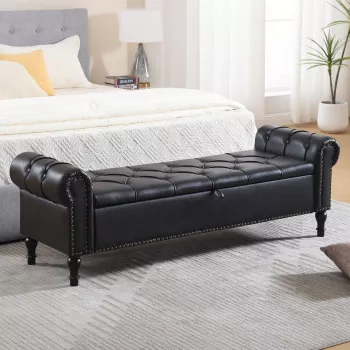
A classic bench is backless, but many options include arms or even a partial back for a more anchored look. Ottomans are usually armless and backless; when you see an upholstered piece with arms plus a lift-top or storage, it often lands in the “storage ottoman bench” category—blending both worlds.
Both can include storage, but it’s more common to see ottomans with hidden compartments for blankets, shoes, or living-room clutter. If you’re comparing an upholstered bench with a lift-top to a standard bench, the deciding factor is often where it will live: entryways favor sit-and-go function, while living rooms and bedrooms benefit from a cushioned top and concealed storage. For a deeper look at a popular hybrid option, visit this guide to a 67-inch leather storage ottoman bench with arms.
Yes, as long as it’s sturdy and the height works for putting on and taking off shoes. A firm, structured storage ottoman bench is usually a better entryway substitute than a very soft, low ottoman.
A bench is typically a structured seat designed for sitting—often with a longer, firmer profile and enough support for multiple people. An ottoman is usually a cushioned, low piece meant primarily as a footrest, though many are sturdy enough to serve as extra seating or a soft surface for a tray.
Most benches are made for upright seating at an entryway, dining table, or the foot of a bed. Ottomans lean toward comfort-first lounging: they’re commonly paired with sofas or chairs to support feet, relax legs, and soften a seating area.
Benches often sit closer to chair height and can feel more “furniture-like” with a defined frame, legs, and a firmer top. Ottomans are usually lower and more padded. That extra cushion is great for feet, but it can feel less stable for tasks like putting on shoes—unless the ottoman is specifically built as an ottoman bench with a reinforced base.
A classic bench is backless, but many options include arms or even a partial back for a more anchored look. Ottomans are usually armless and backless; when you see an upholstered piece with arms plus a lift-top or storage, it often lands in the “storage ottoman bench” category—blending both worlds.
Both can include storage, but it’s more common to see ottomans with hidden compartments for blankets, shoes, or living-room clutter. If you’re comparing an upholstered bench with a lift-top to a standard bench, the deciding factor is often where it will live: entryways favor sit-and-go function, while living rooms and bedrooms benefit from a cushioned top and concealed storage. For a deeper look at a popular hybrid option, visit this guide to a 67-inch leather storage ottoman bench with arms.
Yes, as long as it’s sturdy and the height works for putting on and taking off shoes. A firm, structured storage ottoman bench is usually a better entryway substitute than a very soft, low ottoman.





Leave a comment