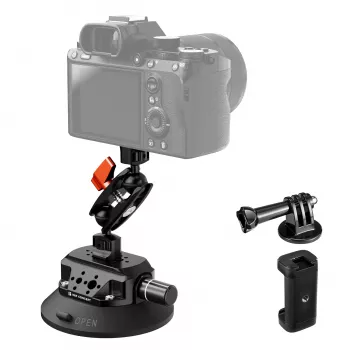
A suction cup camera mount performs best on surfaces that are smooth, non-porous, and rigid. Among the options listed, clean glass is usually the most reliable, followed by glossy, sealed metal. Plastics and painted panels can work well in specific cases, but they’re more dependent on texture, coatings, and how firm the surface is under load.
Glass is the top choice because it’s typically ultra-smooth and non-porous, allowing the suction cup’s lip to form a consistent airtight seal. For the strongest hold, wipe away dust, fingerprints, and any glass cleaner residue before mounting.
Metal can be excellent if it’s smooth and sealed (think polished stainless steel or a glossy powder-coated panel). Bare metal with fine texture, brushed finishes, or oxidation can introduce micro-gaps that slowly leak air and weaken the seal.
Plastic varies a lot. Glossy, rigid plastics can hold well, but many plastics have subtle texture, flex under load, or include mold-release oils that reduce grip. If the plastic panel bends when you press the suction cup, the seal is more likely to break over time—especially with vibration.
Painted surfaces depend on the paint type and finish. Smooth, glossy automotive-style paint can work, but matte paint and “orange peel” texture can prevent a full seal. Also, weaker paint or older clear coats may risk marking when a strong suction cup is removed.
Start with a spotless surface (isopropyl alcohol works well), warm the suction cup slightly in cool weather, and press firmly while engaging the lock to push out trapped air. Avoid seams, decals, textured coatings, and panels that flex.
For more setup details and stability tips, see the full guide here: 4.5-inch Suction Cup Camera Mount + Magic Arm Guide.
Mount to a rigid, smooth surface, fully engage the suction lock, and re-check the seal after a few minutes. Reducing leverage (shorter arm, lighter load) and avoiding flexy panels also helps the mount stay secure.
A suction cup camera mount performs best on surfaces that are smooth, non-porous, and rigid. Among the options listed, clean glass is usually the most reliable, followed by glossy, sealed metal. Plastics and painted panels can work well in specific cases, but they’re more dependent on texture, coatings, and how firm the surface is under load.
Glass is the top choice because it’s typically ultra-smooth and non-porous, allowing the suction cup’s lip to form a consistent airtight seal. For the strongest hold, wipe away dust, fingerprints, and any glass cleaner residue before mounting.
Metal can be excellent if it’s smooth and sealed (think polished stainless steel or a glossy powder-coated panel). Bare metal with fine texture, brushed finishes, or oxidation can introduce micro-gaps that slowly leak air and weaken the seal.
Plastic varies a lot. Glossy, rigid plastics can hold well, but many plastics have subtle texture, flex under load, or include mold-release oils that reduce grip. If the plastic panel bends when you press the suction cup, the seal is more likely to break over time—especially with vibration.
Painted surfaces depend on the paint type and finish. Smooth, glossy automotive-style paint can work, but matte paint and “orange peel” texture can prevent a full seal. Also, weaker paint or older clear coats may risk marking when a strong suction cup is removed.
Start with a spotless surface (isopropyl alcohol works well), warm the suction cup slightly in cool weather, and press firmly while engaging the lock to push out trapped air. Avoid seams, decals, textured coatings, and panels that flex.
For more setup details and stability tips, see the full guide here: 4.5-inch Suction Cup Camera Mount + Magic Arm Guide.
Mount to a rigid, smooth surface, fully engage the suction lock, and re-check the seal after a few minutes. Reducing leverage (shorter arm, lighter load) and avoiding flexy panels also helps the mount stay secure.





Leave a comment