A vet visit can be challenging when your dog is worried about the car, unfamiliar people, or being handled. A little preparation can make the experience more manageable for both of you, even if it doesn’t eliminate every stressful moment.
We recommend starting with small, positive steps and making a plan with your veterinary team. Our checklist below can help you organize the details, while our guide offers an additional resource to use as you prepare.
Stress can look different from one dog to another. Some dogs tremble, pant, or pace; others hide, become unusually still, or hesitate at the clinic door. You may also notice your dog turning away, avoiding contact, or refusing a treat they would normally enjoy.
Pay attention to changes from your dog’s usual behavior, including when they start and what seems to make them worse. Tell the veterinary team what you notice, even if your dog behaves differently once you arrive. That information can help the team plan a safer, more comfortable visit.
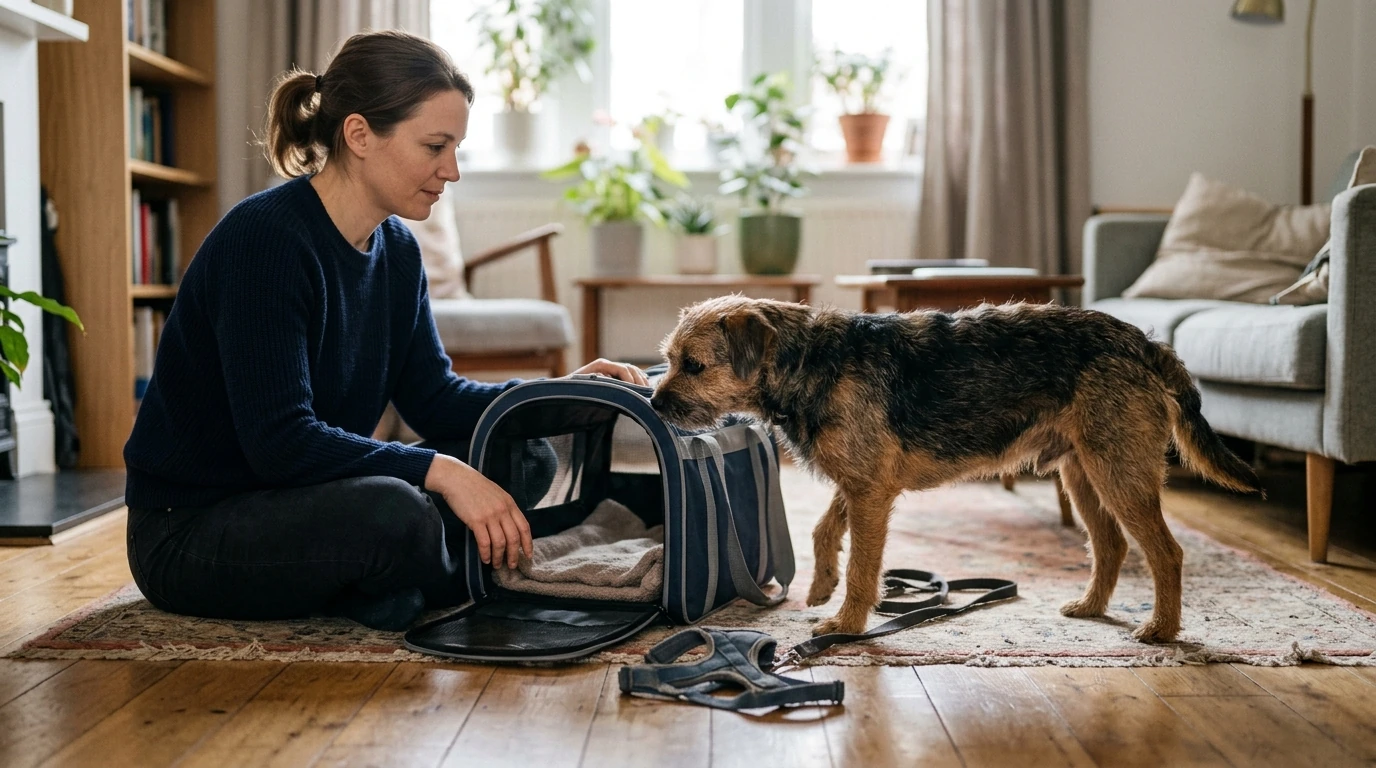
Keep practice sessions short and positive. If your dog is wary of a carrier, place it where they can investigate it at their own pace. Reward voluntary approaches if food is appropriate, then end the session before your dog becomes overwhelmed. You can take a similar approach with a harness or parked car, gradually building on what your dog can handle without forcing interaction.
Call the clinic before the appointment to ask whether a quieter time is available and whether you can wait outside or in your car. Also ask about food restrictions: some tests and procedures require fasting, so treats may not be appropriate.
If your dog has significant fear or a history of difficult visits, contact your veterinarian well ahead of time. They can help you develop a plan tailored to your dog rather than trying to solve everything at the clinic door.
Use this checklist as a starting point and adapt it to your dog’s needs and your clinic’s instructions.
| When | What to do |
|---|---|
| Before booking | Tell the clinic about your dog’s fears and ask about quieter visit options. |
| A few days before | Practice brief, positive car or carrier sessions and gather medical records. |
| On the day | Follow clinic instructions on food and medication; pack a secure leash and approved treats. |
| At the clinic | Ask where to wait and share any changes in your dog’s behavior with staff. |
| After the visit | Give your dog time to settle and note what helped for next time. |
For another planning resource, explore our How to Calm Your Dog Before the Vet guide and checklist, priced at $7.99. It can help you keep preparation on your radar as the appointment approaches.
Allow extra travel time so you don’t have to rush through loading, parking, or check-in. Use a secure, familiar carrier or a restraint suitable for your dog and your vehicle. If the carrier is new, introduce it before the appointment rather than making the trip its first outing.
At the clinic, give other animals space when possible. Call from outside to ask where the team would like you to wait; if the weather and conditions are safe, the clinic may be able to let you wait in the car until an exam room is ready. Don’t leave your dog unattended in a car.
Offer treats only if the clinic permits them, and avoid pulling or pushing a fearful dog toward people or other pets. If your dog cannot move forward comfortably, pause and ask staff for help.
Keeping your phone charged can make it easier to contact the clinic from the parking lot. If your phone uses USB-C, our USB-C to USB-C fast charging cable is an optional travel item to consider alongside a compatible power source.
Describe the situations that worry your dog, whether that’s being approached by strangers, having their paws touched, or seeing other dogs nearby. Ask about gentler handling, breaks, or other adjustments the team can make during the visit. Let staff know if your dog has previously snapped or bitten so everyone can plan for safety.
For severe anxiety, discuss possible medication with your veterinarian before the appointment. Never give human medication or a calming product without veterinary guidance. Your veterinarian can advise whether an option is appropriate and how to use it.
Our preparation guide supports these conversations; it does not replace individualized veterinary care. For more general resources, visit Fear Free Happy Homes and the American Veterinary Medical Association’s pet owner resources.
Once you’re home, give your dog a quiet opportunity to settle. Make a few notes while the visit is fresh: Did waiting outside help? Was there a particular part of the trip or exam that was difficult? Share those observations with the clinic before your next appointment.
Our team hopes these small steps make planning feel more manageable. When you’re ready to prepare again, our guide and checklist can help you organize the details alongside your veterinarian’s advice.
Ask your veterinarian before giving any medication, supplement, or calming product. Follow their instructions and avoid human medication unless your veterinarian specifically prescribes it.
Check with the clinic first, especially if your dog is having a test or procedure that may require fasting. Ask whether treats are allowed, too.
Call the veterinary team from outside and describe what your dog is doing. Ask about waiting options and a safe, gradual entry plan rather than forcing your dog inside.





Leave a comment