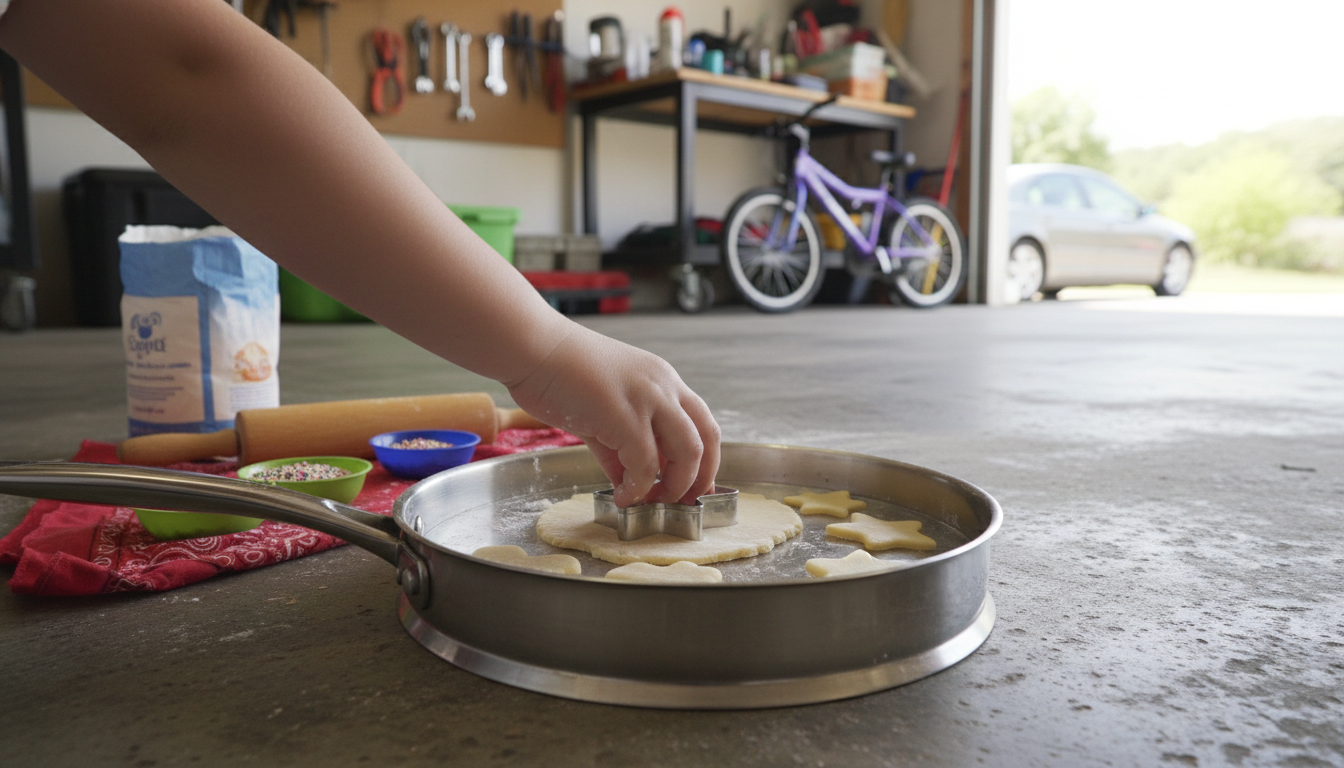
Yes, a stainless steel pan can work as a cookie sheet in a pinch, but it won’t behave like a traditional aluminum sheet pan. Stainless steel doesn’t conduct heat as evenly, so cookies may bake less uniformly and can brown differently from batch to batch. You can still get good results by adjusting your approach and expectations.
If you’re using a stainless steel baking sheet or a flat stainless steel pan, start by lightly greasing it or lining it with parchment paper. Stainless steel tends to stick more than nonstick or seasoned surfaces, especially with sugary doughs. Parchment also helps buffer direct heat, which can reduce over-browning on the bottom.
Place the pan on the center rack and consider lowering the oven temperature by about 10–15°F if your cookies are browning too quickly underneath. Because stainless steel can create hot spots, rotating the pan halfway through baking can help even things out. For best consistency, keep your dough portions similar in size and spacing so airflow and heat exposure are more predictable.
Skip stainless steel if the pan has tall sides like a roasting pan or sauté pan. High sides block airflow and can trap steam, which may lead to softer cookies that spread differently and bake unevenly. Also avoid using stainless steel if it’s warped, heavily scratched, or has burnt-on residue—those issues can worsen sticking and create uneven browning.
Let cookies rest for 2–5 minutes after baking before moving them. This short cooling window helps them firm up and release more cleanly. Use a thin spatula, and avoid scraping aggressively to protect the surface. For cleanup, soak the pan in warm water and use a non-abrasive sponge; stuck-on sugar often loosens with a short soak.
For more details on stainless steel bakeware and what to look for in sets designed for cookies and more, visit this stainless steel cookie and mold set guide.
It’s not required, but it’s strongly recommended for cookies. Parchment reduces sticking and helps prevent overly dark bottoms, especially with sugary or thin batters.
Yes, a stainless steel pan can work as a cookie sheet in a pinch, but it won’t behave like a traditional aluminum sheet pan. Stainless steel doesn’t conduct heat as evenly, so cookies may bake less uniformly and can brown differently from batch to batch. You can still get good results by adjusting your approach and expectations.
If you’re using a stainless steel baking sheet or a flat stainless steel pan, start by lightly greasing it or lining it with parchment paper. Stainless steel tends to stick more than nonstick or seasoned surfaces, especially with sugary doughs. Parchment also helps buffer direct heat, which can reduce over-browning on the bottom.
Place the pan on the center rack and consider lowering the oven temperature by about 10–15°F if your cookies are browning too quickly underneath. Because stainless steel can create hot spots, rotating the pan halfway through baking can help even things out. For best consistency, keep your dough portions similar in size and spacing so airflow and heat exposure are more predictable.
Skip stainless steel if the pan has tall sides like a roasting pan or sauté pan. High sides block airflow and can trap steam, which may lead to softer cookies that spread differently and bake unevenly. Also avoid using stainless steel if it’s warped, heavily scratched, or has burnt-on residue—those issues can worsen sticking and create uneven browning.
Let cookies rest for 2–5 minutes after baking before moving them. This short cooling window helps them firm up and release more cleanly. Use a thin spatula, and avoid scraping aggressively to protect the surface. For cleanup, soak the pan in warm water and use a non-abrasive sponge; stuck-on sugar often loosens with a short soak.
For more details on stainless steel bakeware and what to look for in sets designed for cookies and more, visit this stainless steel cookie and mold set guide.
It’s not required, but it’s strongly recommended for cookies. Parchment reduces sticking and helps prevent overly dark bottoms, especially with sugary or thin batters.





Leave a comment