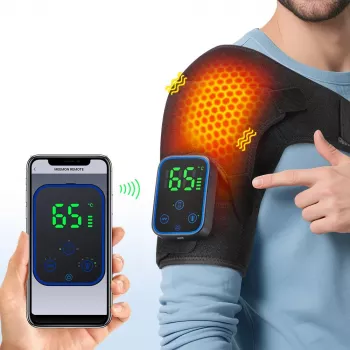
Yes—shoulder heating pads can really work, especially for achy, stiff, or tight muscles. Heat therapy raises tissue temperature, which helps increase local blood flow and makes muscles and connective tissue feel more pliable. For many people, that translates into less tightness, easier movement, and a noticeable drop in discomfort during and shortly after use.
They tend to help most when the problem is muscle soreness, tension from posture, or lingering stiffness. Heat can be less effective (or even irritating) if the shoulder is freshly injured, visibly swollen, or inflamed, where cold therapy is often a better first step.
When warmth reaches the shoulder, it can:
Many people also like heating pads because they’re simple to use at home—before activity to loosen up, or later in the day to calm down tightness.
Start with a comfortable, moderate heat setting and limit sessions to about 15–20 minutes. Position the pad so it covers the most tender or tight areas (often the upper trapezius, shoulder cap, and back of the shoulder), and avoid sleeping with it on. If the pad includes vibration or massage, keep intensity low at first—strong pressure over a sensitive spot can backfire.
Stop using heat and seek medical advice if pain is severe, radiates down the arm, comes with numbness/tingling, or follows a significant injury.
For broad, everyday soreness, a contoured shoulder wrap that stays in place can be more useful than a flat pad. If convenience matters, cordless options can make it easier to use heat consistently. For a deeper dive on features like fit, heat levels, vibration modes, and safety tips, see the full guide here: wireless heat and vibration shoulder massager guide.
Skip heat (or switch to cold) if the shoulder is hot, swollen, bruised, or newly injured. If symptoms don’t improve over a week or two, getting an evaluation can prevent a small issue from becoming a long-term limitation.
Alternating can help when you have both soreness and irritation. Use ice for 10–15 minutes if the shoulder feels inflamed or swollen, and use heat for 15–20 minutes when stiffness and tightness are the main issue.
Yes—shoulder heating pads can really work, especially for achy, stiff, or tight muscles. Heat therapy raises tissue temperature, which helps increase local blood flow and makes muscles and connective tissue feel more pliable. For many people, that translates into less tightness, easier movement, and a noticeable drop in discomfort during and shortly after use.
They tend to help most when the problem is muscle soreness, tension from posture, or lingering stiffness. Heat can be less effective (or even irritating) if the shoulder is freshly injured, visibly swollen, or inflamed, where cold therapy is often a better first step.
When warmth reaches the shoulder, it can:
Many people also like heating pads because they’re simple to use at home—before activity to loosen up, or later in the day to calm down tightness.
Start with a comfortable, moderate heat setting and limit sessions to about 15–20 minutes. Position the pad so it covers the most tender or tight areas (often the upper trapezius, shoulder cap, and back of the shoulder), and avoid sleeping with it on. If the pad includes vibration or massage, keep intensity low at first—strong pressure over a sensitive spot can backfire.
Stop using heat and seek medical advice if pain is severe, radiates down the arm, comes with numbness/tingling, or follows a significant injury.
For broad, everyday soreness, a contoured shoulder wrap that stays in place can be more useful than a flat pad. If convenience matters, cordless options can make it easier to use heat consistently. For a deeper dive on features like fit, heat levels, vibration modes, and safety tips, see the full guide here: wireless heat and vibration shoulder massager guide.
Skip heat (or switch to cold) if the shoulder is hot, swollen, bruised, or newly injured. If symptoms don’t improve over a week or two, getting an evaluation can prevent a small issue from becoming a long-term limitation.
Alternating can help when you have both soreness and irritation. Use ice for 10–15 minutes if the shoulder feels inflamed or swollen, and use heat for 15–20 minutes when stiffness and tightness are the main issue.




Leave a comment