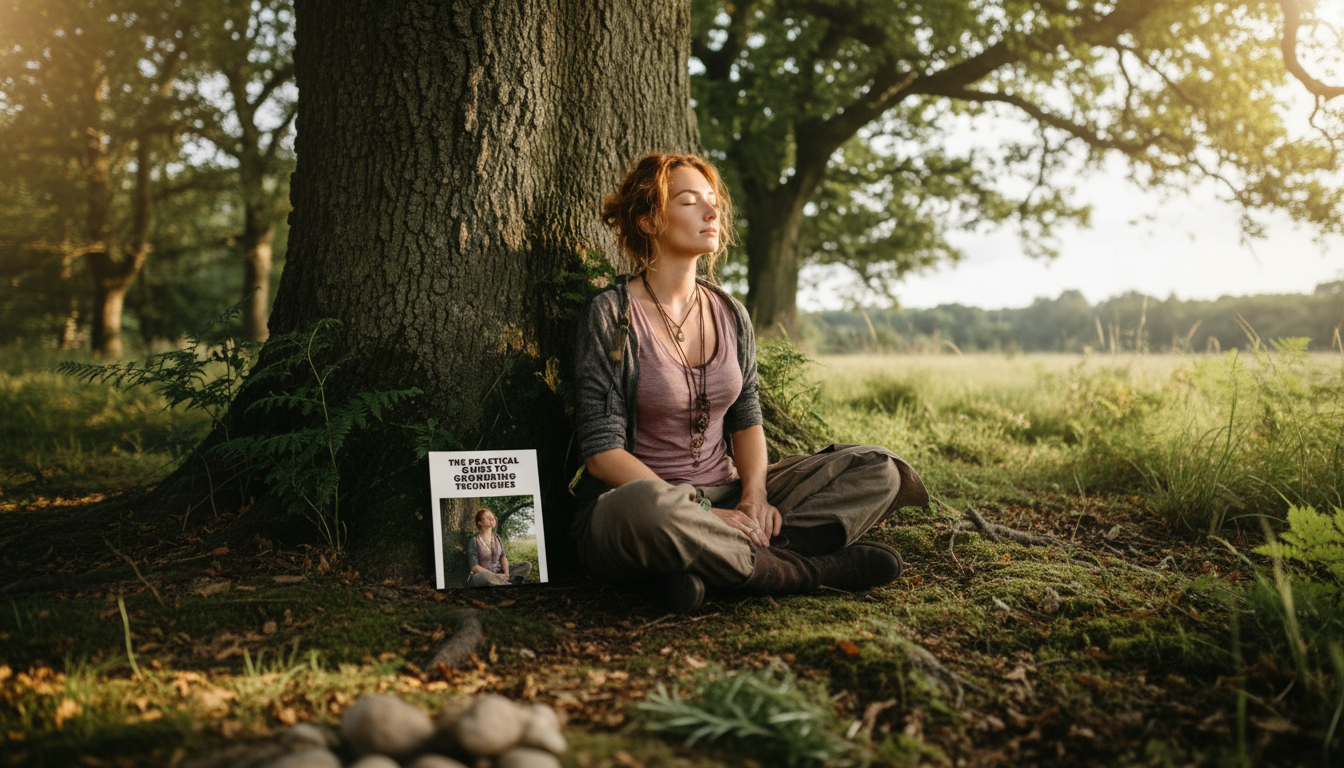
Grounding techniques are practical ways to reconnect with the present moment when stress, anxiety, or overwhelm starts to pull attention into racing thoughts or intense emotions. They work by gently shifting attention into what the body can feel and what the senses can reliably notice right now. With a few simple methods you can use anywhere, calming support becomes more accessible at home, at work, or on the go.
Grounding is the skill of bringing attention back to the here-and-now through your body, your senses, and your environment. It’s especially useful when the mind is speeding up, when emotions feel bigger than the situation, or when you feel “not quite here.”
Grounding can help during anxiety spirals, acute stress, panic symptoms, overwhelm, rumination, dissociation, or emotional flooding. Think of it as either a short reset (about 30–120 seconds) to reduce intensity, or a longer routine (5–15 minutes) that pairs well with mindfulness.
For general stress support, the American Psychological Association offers helpful guidance on stress management strategies that complement grounding practices: https://www.apa.org/topics/stress.
When you need fast relief, use this one-minute sequence. The goal isn’t to “erase” anxiety—it’s to lower the volume enough to think clearly.
Sensory grounding uses concrete, real-time input to anchor attention. The classic 5-4-3-2-1 method is a great start, but it helps to have a few “extras” depending on your setting.
| Setting | 30–60 seconds | 2–5 minutes | 5–15 minutes |
|---|---|---|---|
| Work/School | Feet press + long exhale x3 | 5-4-3-2-1 with silent labeling | Walk break: notice 10 colors + paced breathing |
| Home | Cold water on wrists | Body scan from head to toes | Yoga-style stretching + journaling 5 lines of facts |
| Public transit/Outdoors | Name 3 fixed points in the environment | Count steps in sets of 10 + reset posture | Sit and orient: sounds near/far + breath ratio 4:6 |
| Before sleep | Hand on chest/abdomen + slow exhale | Progressive muscle relaxation (quick version) | Guided relaxation + gentle stretch routine |
Breath and body practices are often the quickest route to a calmer baseline because they work “bottom-up,” starting with physical signals of safety. If you have a history of panic or you feel lightheaded easily, keep your breathing gentle and reduce the counts.
For more context on anxiety symptoms and evidence-based care, the National Institute of Mental Health provides an overview here: https://www.nimh.nih.gov/health/topics/anxiety-disorders.
Cognitive grounding supports calm by tightening the focus to what’s verifiably true in the present moment, without getting pulled into predictions or self-judgments.
The “best” grounding technique is the one you’ll actually use when stress spikes. A quick decision rule can help you choose fast.
For education and guidance related to trauma and support resources, SAMHSA provides information here: https://www.samhsa.gov/trauma-violence. If there is risk of self-harm or immediate danger, contact local emergency services or a crisis hotline right away.
Focus on present-moment orientation and body-based safety cues like feeling your feet on the floor, naming neutral facts (date, place), and using a sensory “anchor” you can see or touch. Use trauma-informed pacing—stop any method that increases activation—and seek professional support if symptoms feel intense or persistent.






Leave a comment