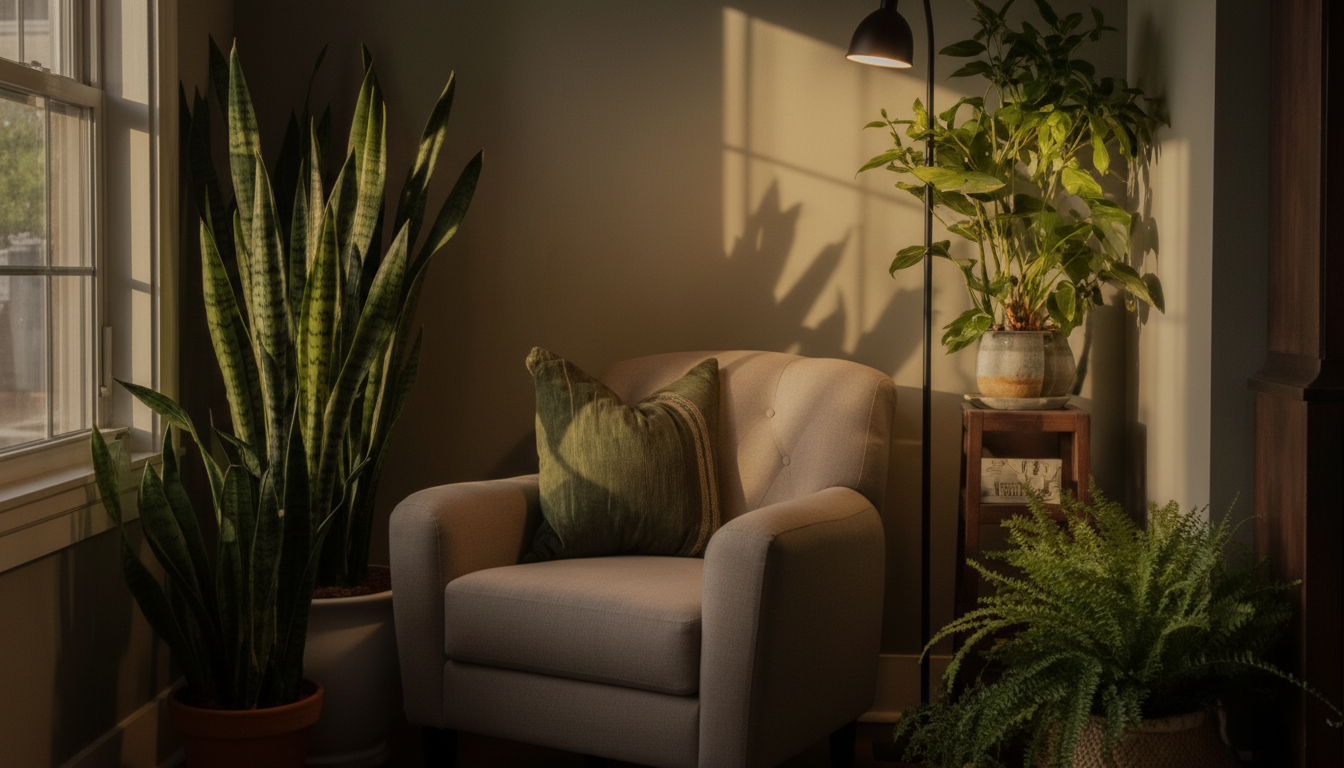
A plant corner works best when it feels intentional—like a small indoor retreat—while still being easy to water, rotate, and clean. Start by choosing the corner first (not the plants): notice how much natural light it gets, whether there’s a nearby outlet, and how much floor space you can spare for pots, a stand, or a small piece of furniture.
Pick a taller plant to set the height and mood—think a fiddle-leaf fig, rubber plant, or dracaena for bright rooms, or a ZZ plant for lower light. Place it slightly off-center so the corner looks styled rather than stacked.
Use two to three heights so every plant can “read” from across the room. A slim plant stand lifts medium pots, while a small stool or crate can elevate a trailing plant. If floor space is tight, add a corner shelf or wall-mounted ledge for compact pots.
Mix textures—ceramic, woven baskets, matte metal—but stick to a consistent palette (warm neutrals, black-and-white, or earthy terracotta). Cohesive planters make different leaf shapes look curated instead of chaotic.
Plant corners look calmer when there’s breathing room. Leave a bit of wall visible, and avoid lining pots edge-to-edge. Add one supporting decor piece: a small lamp for evening glow, a framed print leaning on a shelf, or a simple watering can that doubles as decor.
Protect floors with saucers or a tray, and group plants with similar light and watering needs. Keep a microfiber cloth nearby for dusting leaves, and rotate plants every couple of weeks for even growth.
For a step-by-step approach to choosing plants, light, and styling details, visit this complete guide to styling a calming plant corner that thrives.
Low- to medium-light corners do well with ZZ plants, snake plants, pothos, cast iron plants, and peace lilies. If the corner gets bright indirect light, rubber plants and monsteras can also thrive.
Choose a plant that matches sun exposure and provides structure, such as boxwood, hydrangea, or a dwarf evergreen for a strong corner anchor. In warmer climates, ornamental grasses or low-maintenance shrubs can soften the edge without blocking walkways.
Place the tallest plant in back or to one side, then layer medium plants on a stand, and finish with a trailing plant that drapes outward. Keep a few inches between pots and vary leaf shapes so the grouping feels balanced.







Leave a comment