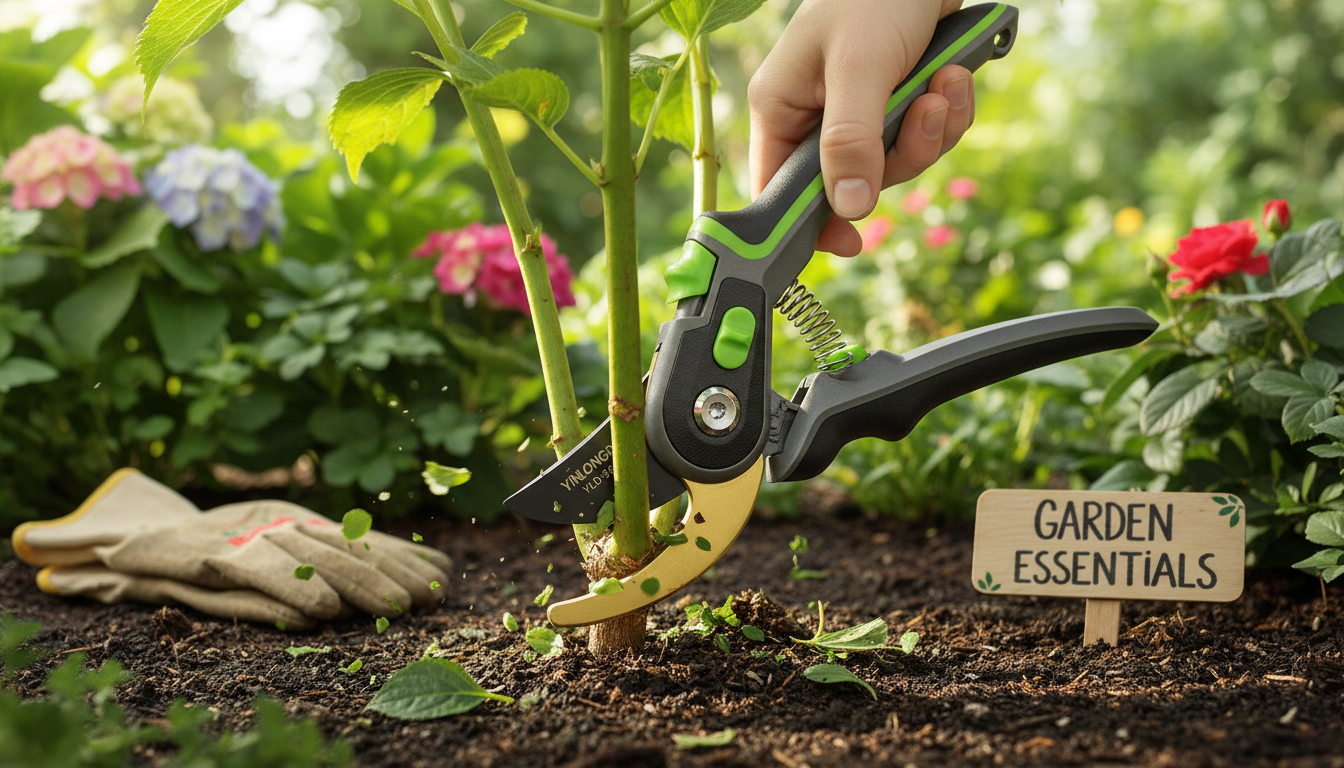
The best garden shears are the ones that match what you cut most often and how your hands feel after a few minutes of pruning. Start by deciding whether you need precision for delicate stems, power for thicker branches, or an all-purpose tool for routine trimming. If you’re buying just one pair, look for sharp, corrosion-resistant blades, a comfortable grip, and a locking mechanism that’s easy to use with one hand.
Choose compact pruning snips or light-duty bypass shears. Bypass blades (one blade sliding past the other) make cleaner cuts on green growth, which helps plants heal faster and reduces crushed stems.
Go with standard bypass pruning shears rated for branches up to about 3/4 inch (check the manufacturer’s cutting capacity). A slim nose helps you reach into dense growth, while a sturdy pivot and spring keep repetitive cuts smooth.
Consider anvil pruners (a blade closing onto a flat surface) or step up to loppers if you routinely cut thicker, woody material. Anvil styles can be effective on dry stems, but they’re more likely to crush live green growth than bypass designs.
Prioritize stainless or high-carbon steel blades, a non-slip handle that fits your hand size, and a reliable safety lock. If you prune often, replaceable springs and blades can extend tool life. Also check for a sap groove or easy-clean blade coating if you work with sticky plants.
Wipe blades after use, disinfect between plants when disease is a concern, and sharpen periodically to avoid tearing stems. A drop of oil on the pivot reduces friction and helps prevent rust.
For a deeper breakdown of blade materials, types, and maintenance, see this guide: https://splendona.com/guide-stainless-steel-garden-pruning-shears-guide/.
Bypass pruners make cleaner cuts on live, green stems, while anvil pruners are better suited to dry or dead wood but can crush softer growth. If most of your pruning is healthy plants, bypass is usually the safer pick.





Leave a comment